How to sell custom engagement rings without your own workshop
A jeweler without a bench needs three things a workshop provides: a model to approve, a bench to make it, and an inspection before it reaches the counter.
AurumFlow
October 27, 2026 · 5 min read
Plenty of good jewelers do not have a bench. A store on 47th Street, a retailer with two counters, a designer who sells online: all of them get asked for custom engagement rings, and all of them face the same choice — say no, or say yes and spend the next month coordinating a modeler, a caster and a setter who have never met each other.
There is a third way, and it is how AurumFlow, a New York jewelry design studio for jewelers, works: one studio does the model, the bench and the inspection, and the jeweler deals with one designer from the brief to the finished ring.
What does a jeweler need from a workshop?
Strip a workshop down to what the client actually pays for, and three jobs are left:
- A model. The client’s idea, drawn to the millimeter, checked so that it can be cast, and shown before anything is committed.
- A bench. Casting in the right alloy, the stones set, the piece polished and stamped.
- A gate. Somebody who checks the finished piece against the approved model before it is handed over — size, weight, stamp, finish, every stone.
A jeweler who owns a workshop does all three in house. A jeweler who does not can buy them separately, from people who each answer for their own part, or together, from one party who answers for the ring.
Step by step: from the client’s idea to the finished ring
- Take the brief at the counter: a photo of a ring the client likes, a sketch, or a catalog design; the ring size; the metal; and the center stone, or at least its shape and size.
- Send it to your designer and approve the design price; modeling starts on a deposit of $80.
- The model comes back in 1–2 business days, checked for casting, with the piece’s price in writing.
- Show the client the renders: the actual piece, in their metal and stone shape, from every side. One round of changes is included.
- Approve the piece’s price and pay. The price is fixed from that moment; production takes 5 business days.
- The piece is cast, set, polished and inspected; you receive the inspection photos and the stone count.
- Hand it to the client. If it falls short of what was approved, it is remade at our cost.
How do you price a custom ring without guessing?
From the model. A finished CAD model is a closed solid, so its volume — and therefore its weight in any alloy — is known before a gram of metal is bought. The price is that weight at today’s gold, plus the work and the finishing, as one number in writing. You can give it to the client while they are still at the counter.
The center stone is the exception and should stay one: it is chosen with the client and priced on its own line, because no amount of geometry says what a particular oval is worth. Everything else — the metal, the making, the setting of any small stones — is in the one price you approve.
There is no commission and no platform fee for jewelers. You pay the price of the piece you approve, and you set your own price to the client.
What should you show the client before anything is made?
The ring they are buying, not a ring like it. A render of the model in their metal and their stone shape closes the sale earlier, removes most of the surprises that turn into returns, and costs nothing like a sample. For many clients, a catalog design is the right start: it is already drawn in every stone shape and metal, so they can choose by looking.
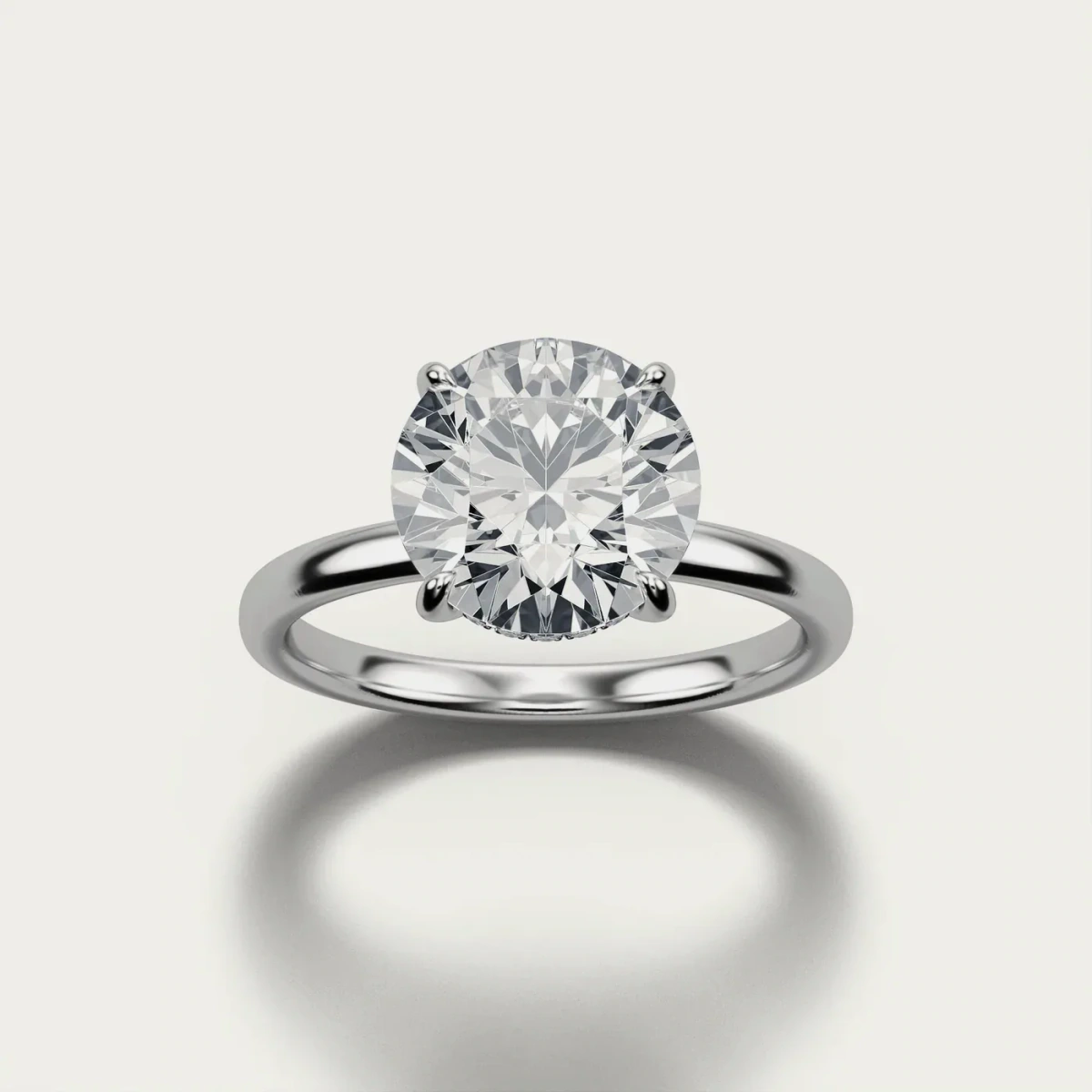
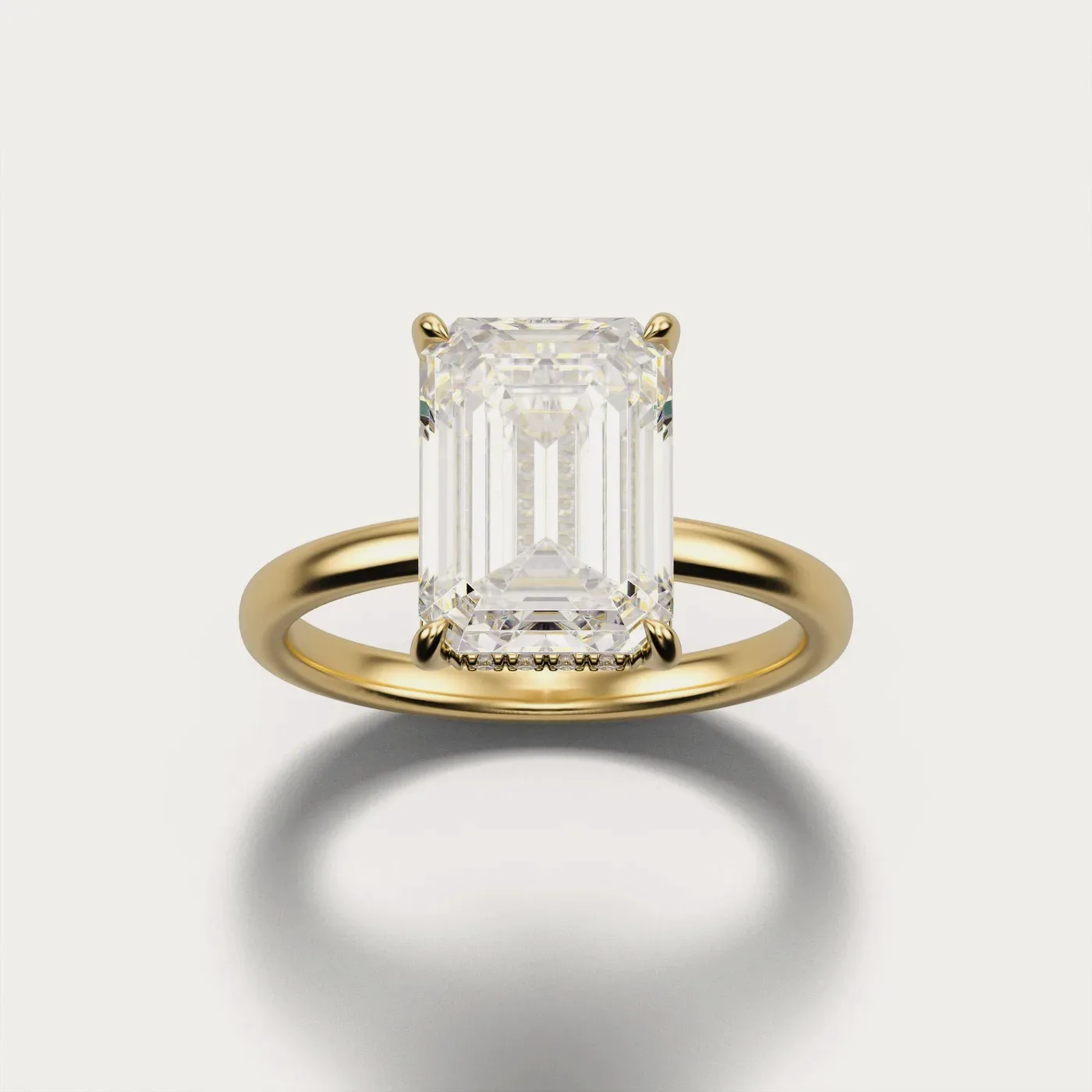
Hidden Halo — the halo you see from the side
A hidden halo sits under the center stone, so the ring reads as a solitaire face-up and shows its diamonds from the side. A catalog design like this can be ordered as it is, or used as the starting point for a custom one.
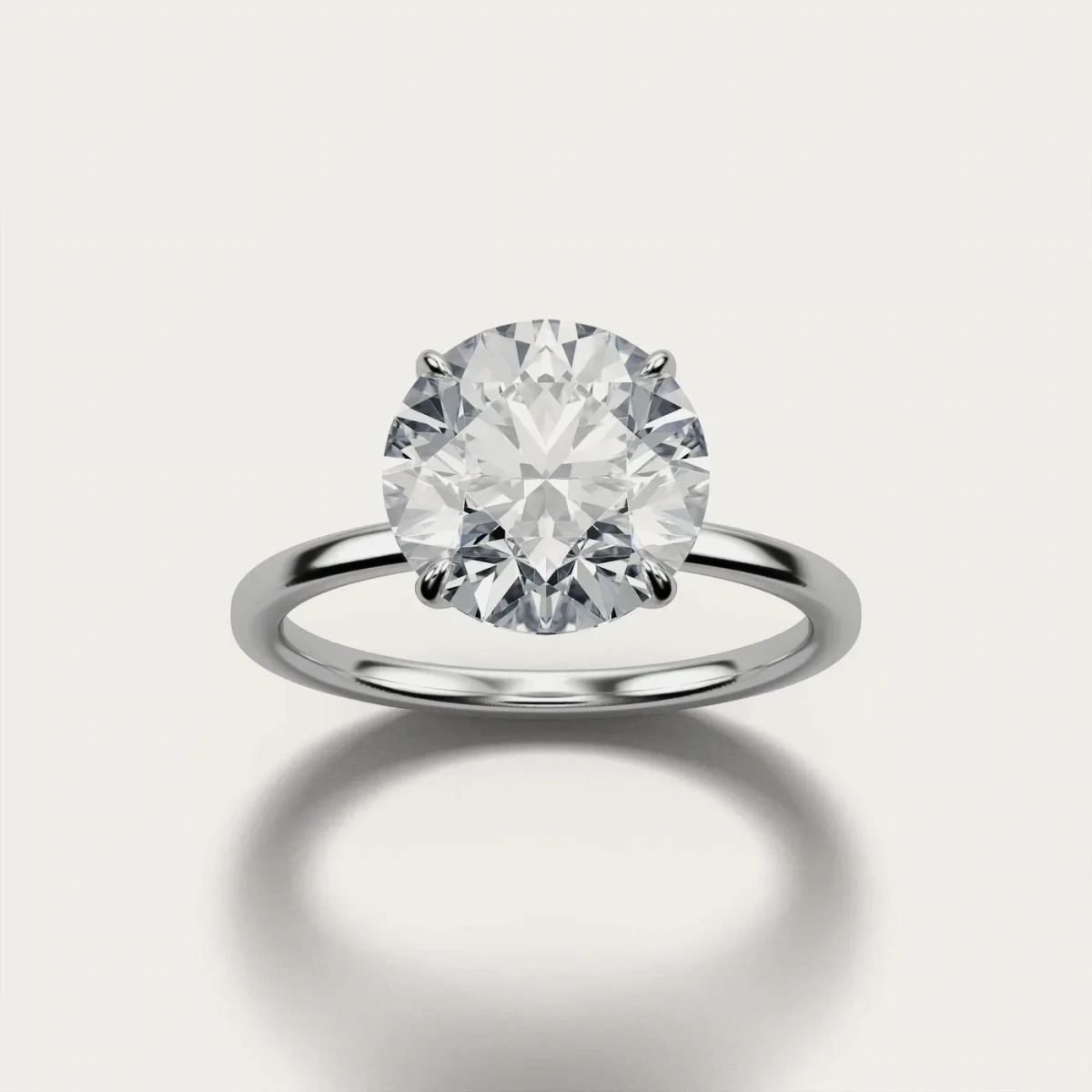
Classic Solitaire — one design, every build
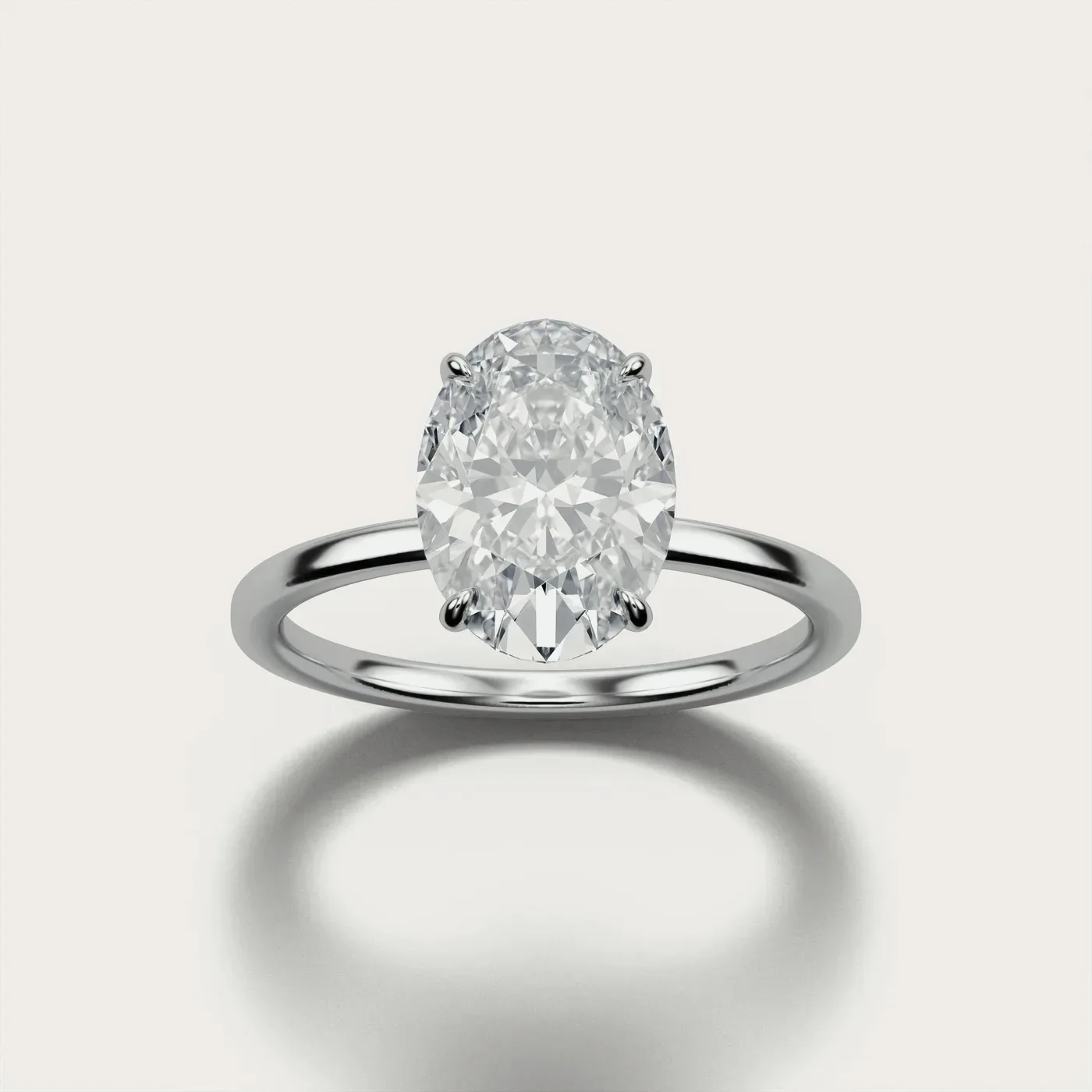
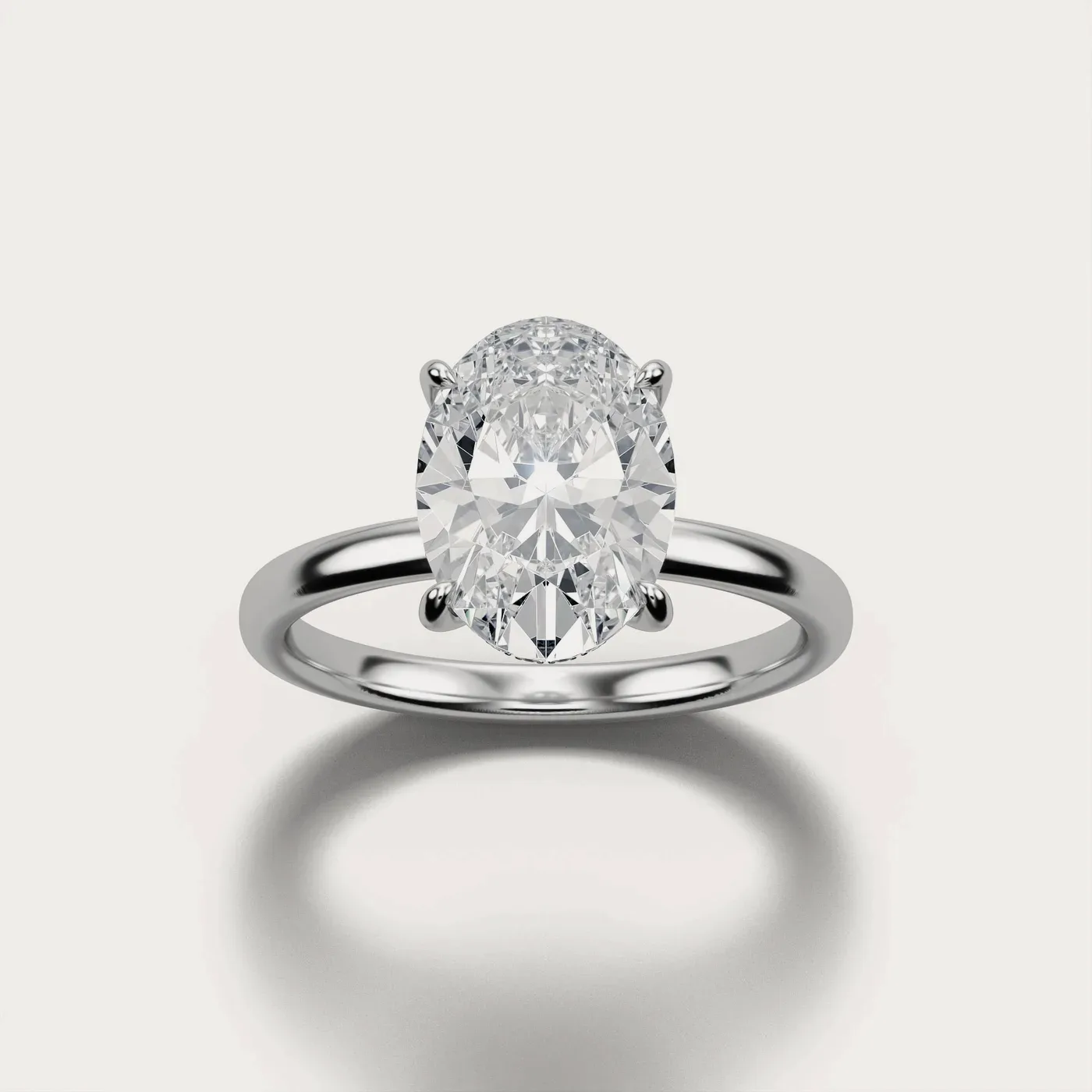
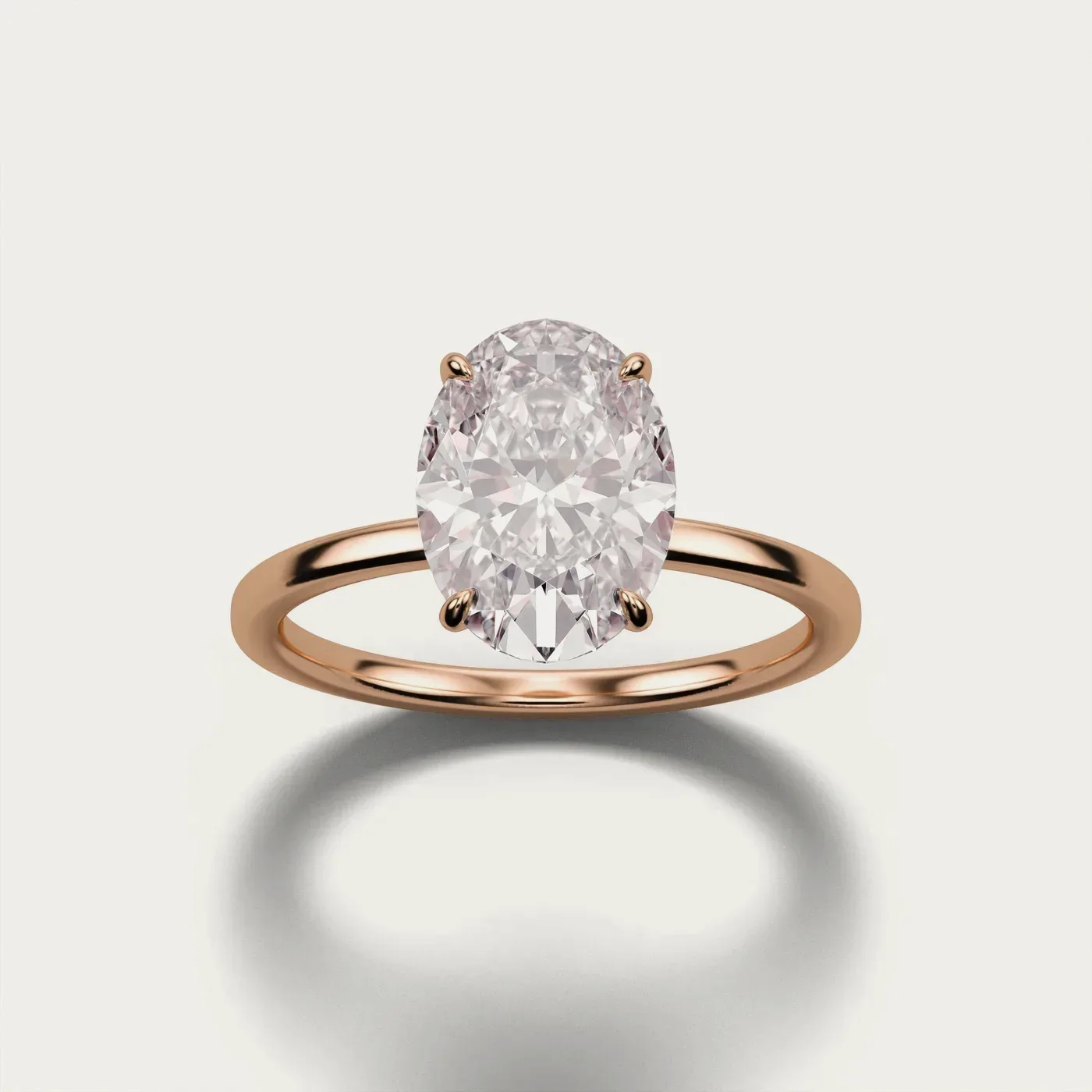
The plain solitaire is a design most clients start from, and the easiest one to sell from a render: one design, every stone shape, every gold.
Who owns a design you have paid for?
You do. Once a custom design is paid in full, the design, the CAD model and the renders are yours, the files can be downloaded at any time, and they are not reused or published. A ring made for you from one of our own catalog designs is yours; the design itself stays in the catalog.
What should you check before choosing a partner?
- One contact for the whole job, or a different person for the model, the casting and the setting.
- A written price before you commit, and whether it moves after you approve.
- Whether the model is checked for casting before you see it, and who pays when it cannot be cast.
- An inspection with photos and a stone count before the piece ships.
- What happens when a piece is not right, and who owns the files.
Every one of those has a short answer. A partner who can give it in writing before the job starts is a partner you will not have to negotiate with after it ends.
Questions about selling custom without a bench
- Can a jeweler sell custom rings without a workshop?
- Yes. A design studio provides the CAD model, the casting and setting, and the inspection; the jeweler takes the brief, shows the client the renders, approves the design and the price, and hands over the finished ring.
- What is left for the jeweler to do?
- The client: taking the brief, choosing the center stone with them, showing them the renders, setting the retail price and handing over the ring. The model, the bench and the inspection are the studio’s.
- How do I quote a custom ring to my client?
- Start from the price of the piece you approve — the metal at today’s gold, the work and the finishing — add the center stone on its own line, and set your own margin. There is no commission or platform fee to account for.
- Can I start from a catalog design instead of a sketch?
- Yes. A catalog design is already drawn in every stone shape and metal it is offered in, so it can be ordered as it is, with no design fee, or used as the starting point for a custom piece.
- Who owns a custom design I order for a client?
- You do, once it is paid in full: the design, the CAD model and the renders, with the files available to download at any time.
Written by AurumFlow
The jeweler’s design studio: CAD, casting and setting, one price.