Sell it before you make it: the quiet economics of renders
A photoreal render costs a fraction of a sample and closes the sale earlier. For a jeweler, that changes cash flow, returns and how many pieces you can show.
AurumFlow
May 8, 2026 · 3 min read
Making a physical sample to show one client is a slow, expensive way to sell a custom piece. A render does the same job for a fraction of the cost — and it does it before any metal is committed. That last clause is the whole essay; the rest is what follows from it.
A sample is inventory you did not mean to buy
A sample is not a marketing cost. It is a finished piece of jewelry that you paid for, in metal, at the metal price of the week you ordered it, and that you now own whether or not anybody buys one. If the client says yes, you have a sample you no longer need. If they say no, you have a sample you never needed. Either way the money is in the case rather than in the bank.
That is bearable when a studio makes a handful of designs a year. It becomes the constraint on the whole business when the ambition is a line — because a line is not one sample, it is a sample of every piece, in the metal you guessed people would want, in the size you guessed would show best.
A render has none of those properties. It costs what it costs once, it does not sit in a case, and it does not have to be guessed at ahead of demand.
The numbers move in your favour
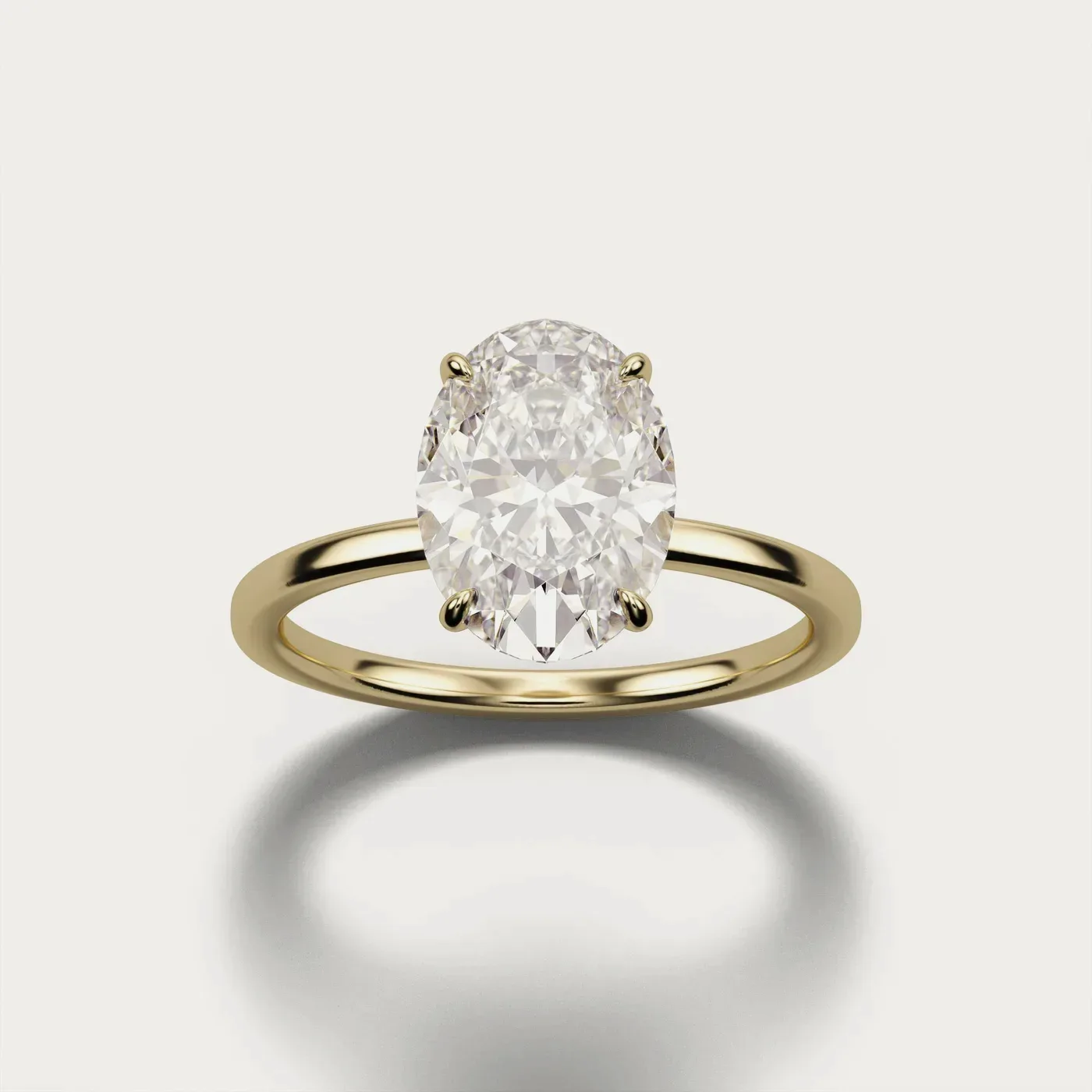
Show the exact piece, in the client’s metal and their stone, and approval happens before production rather than after it. That reorders the cash flow completely: you are paid, or at least committed to, before the metal is bought, rather than financing the piece and hoping.
Returns shrink for the same reason. Most returns on bespoke work are not faults — they are surprises. The stone read differently in yellow than the client imagined, the band was chunkier than the sketch suggested, the halo was more than they wanted. A render removes almost all of that by making the imagined piece and the real one the same picture.
And you can present ten variations as easily as one, which changes what a conversation with a client sounds like.
What one model is actually worth
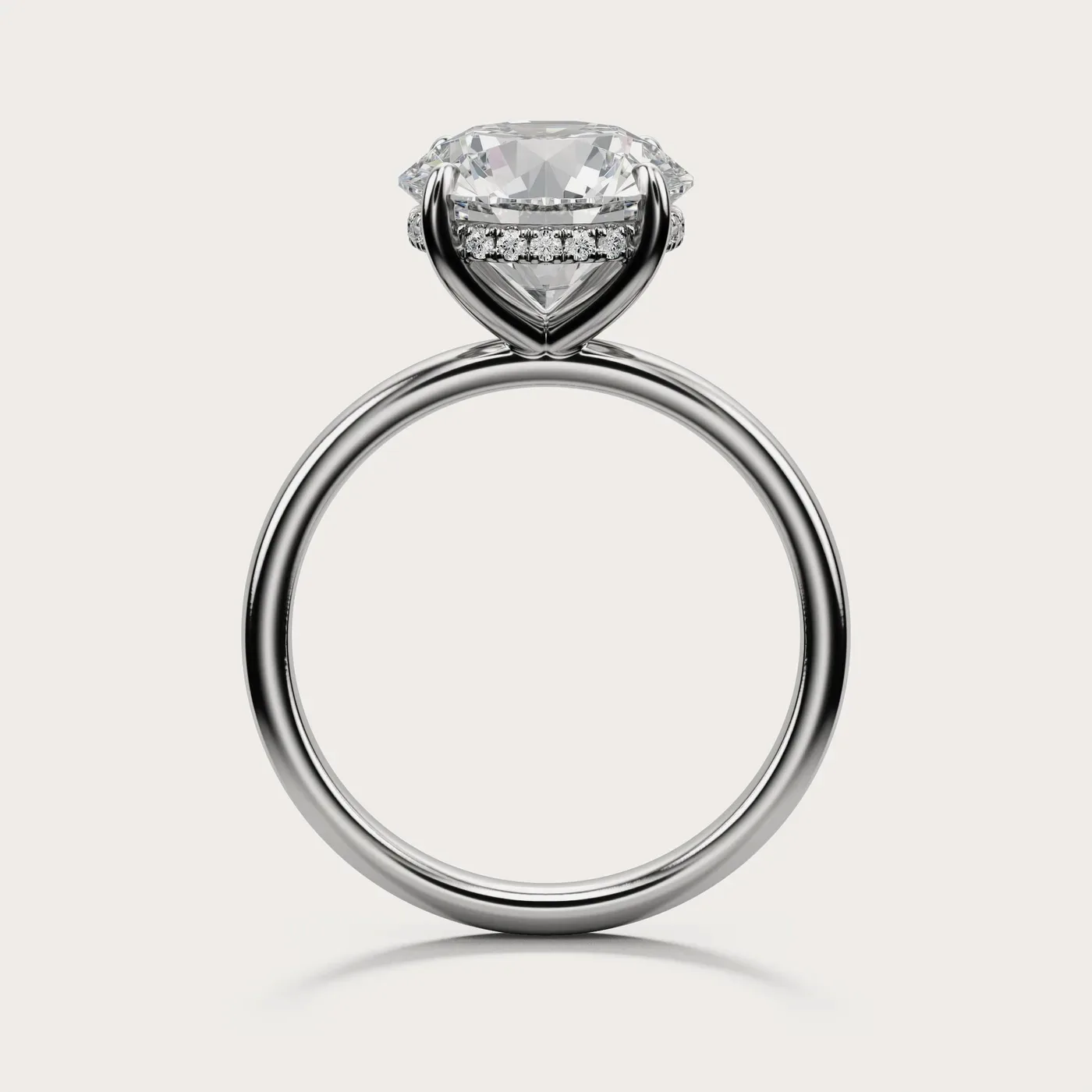
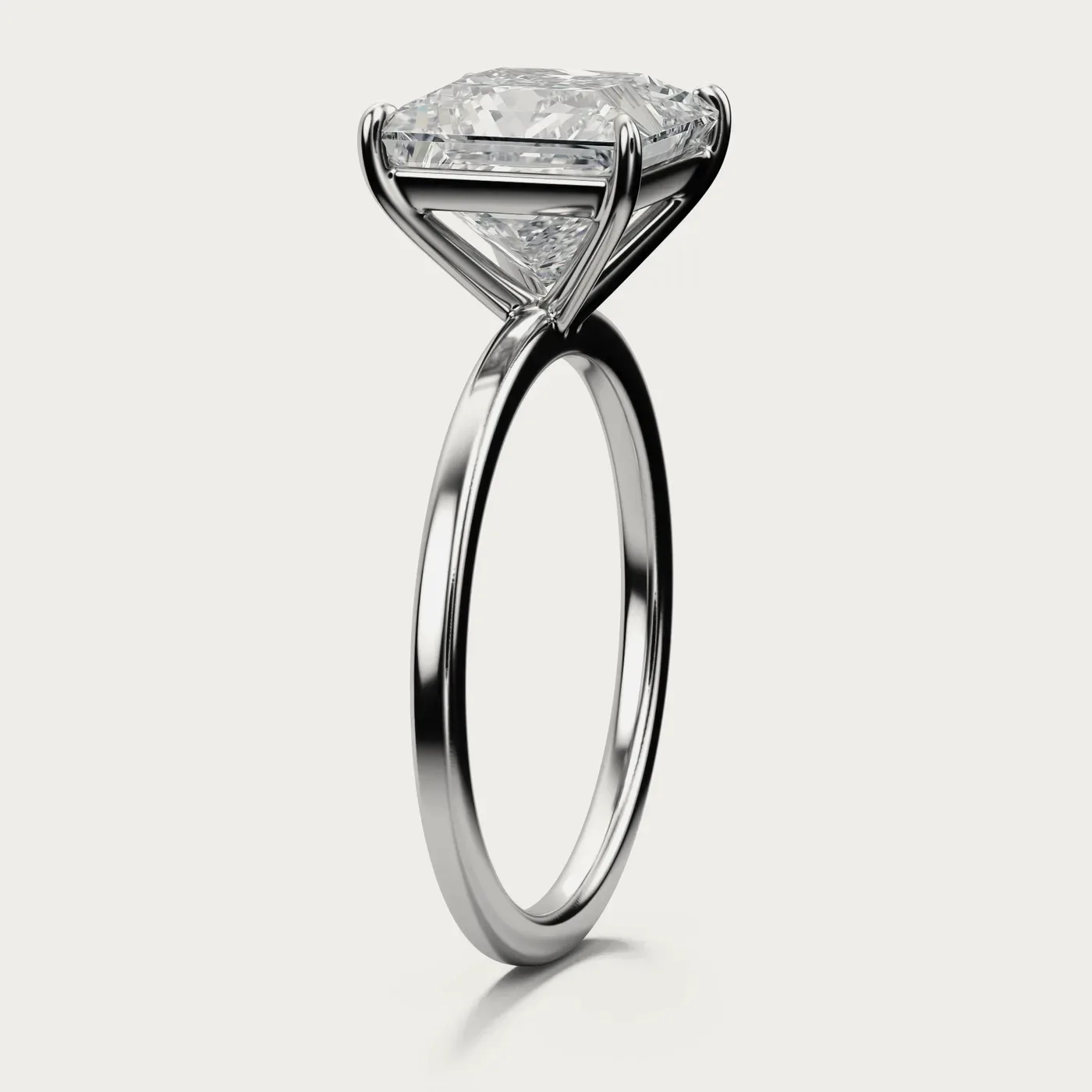
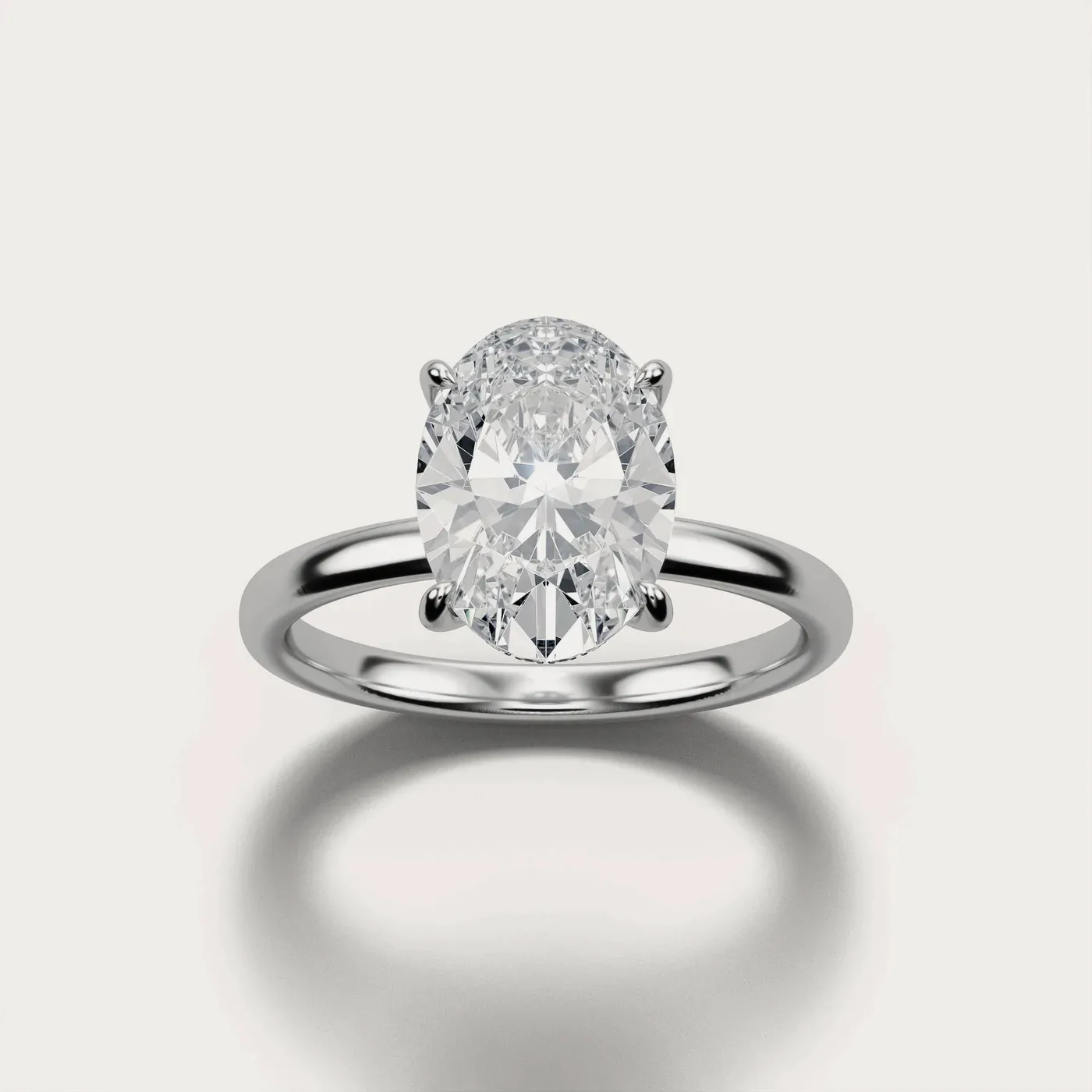
It is worth being concrete about the multiplication, because it is larger than it sounds. One solitaire in our own catalog is offered in thirteen stone shapes and three metals: thirty-nine buildable pieces. Photographed from four cameras each, that is a hundred and fifty-six images — of a design nobody has cast.
Producing thirty-nine samples to photograph them is not a bigger version of the same job. It is a different business, with a different balance sheet and a warehouse. Producing thirty-nine sets of renders from one model is an afternoon of machine time.
The asymmetry is the point. The model is the expensive part, and it is bought once. Everything after it — every metal, every stone shape, every camera — is close to free by comparison, which means the rational number of variations to show is not one.
It changes what you can offer
When a render is cheap and fast, “let me show you a few options” becomes a normal part of the conversation instead of an expensive favour. Bespoke stops being a risk you absorb and becomes a service you sell — confidently, and on the client’s yes.
It also changes what you can put in front of people who have not asked yet. A line sheet of pieces that exist only as models is a real line sheet: buyers respond to it, retailers order from it, and nothing is cast until somebody has committed. Made-to-order stops being a compromise you apologize for and becomes the reason you can show forty pieces instead of six.
The one thing renders do not do
They do not tell you how a piece feels in the hand, and there are clients for whom that is the decision. A render will not settle whether a band is comfortable or whether a ring is heavier than somebody expected — weight in particular is something people are consistently wrong about from a picture.
So the honest version of this argument is not that samples are obsolete. It is that they should be made deliberately, for the few pieces where handling one closes the sale, rather than by default for everything. The default is what costs money, and the default is what a render replaces.
Written by AurumFlow
The managed platform for jewelry production.