Engagement ring styles: a glossary in real pieces
Solitaire, halo, hidden halo, bezel, pavé — what each one actually is, who it suits, and what it costs in bench time. Illustrated with rings we make.
AurumFlow
September 10, 2026 · 7 min read
Style names in this trade are used loosely and sold precisely. A client says "halo" and means one of four things; a supplier writes "pavé" on a quote and it turns out to mean nine stones or ninety. Most of the confusion is avoidable, and almost none of it is resolved by another diagram of a ring with arrows on it.
So this is a glossary written in actual pieces. Every entry below is a design we model and make, photographed rather than drawn, with a link to see it in every stone shape and metal it comes in. Where a style costs real bench hours, it says so, because that is the part the client finds out from the quote.
Solitaire
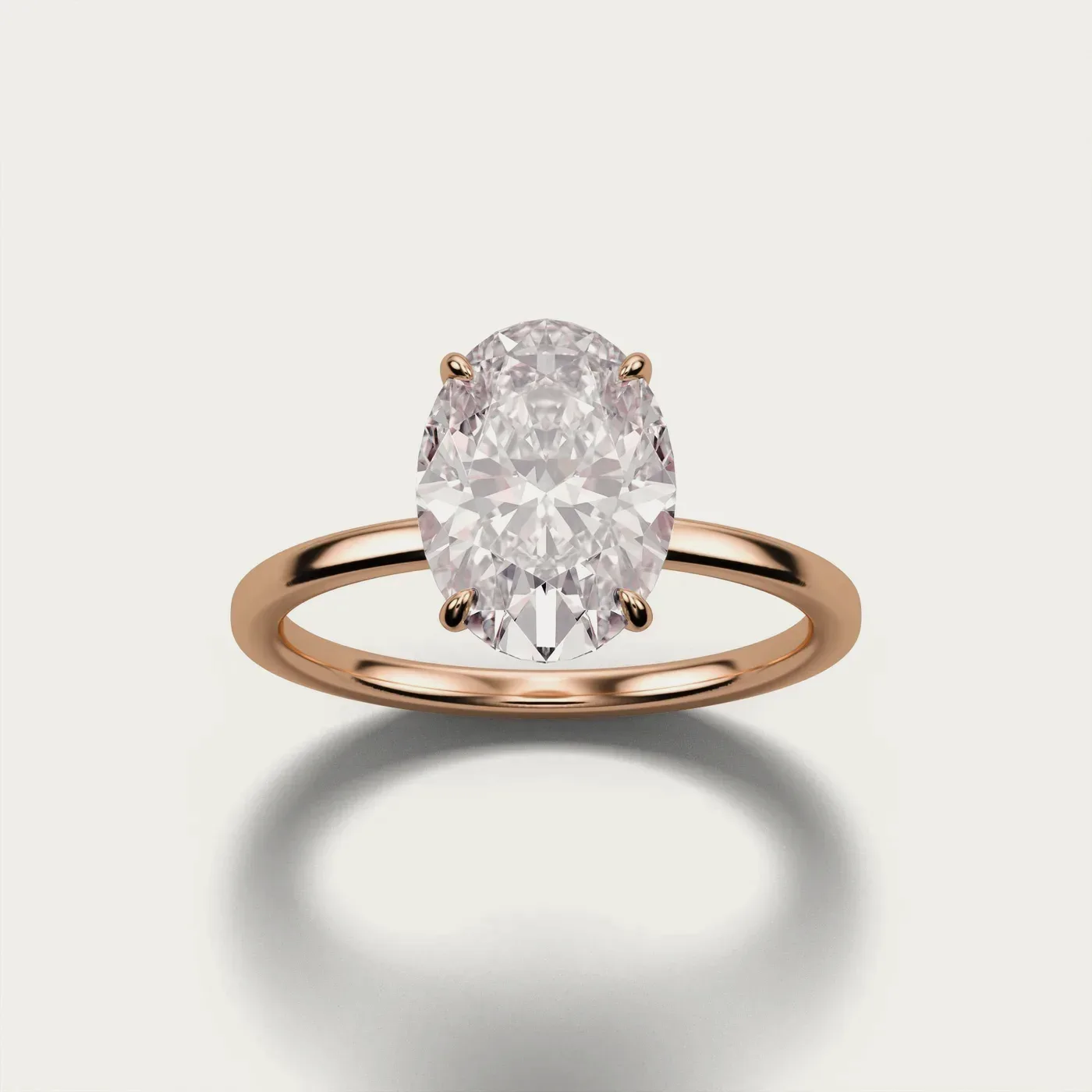
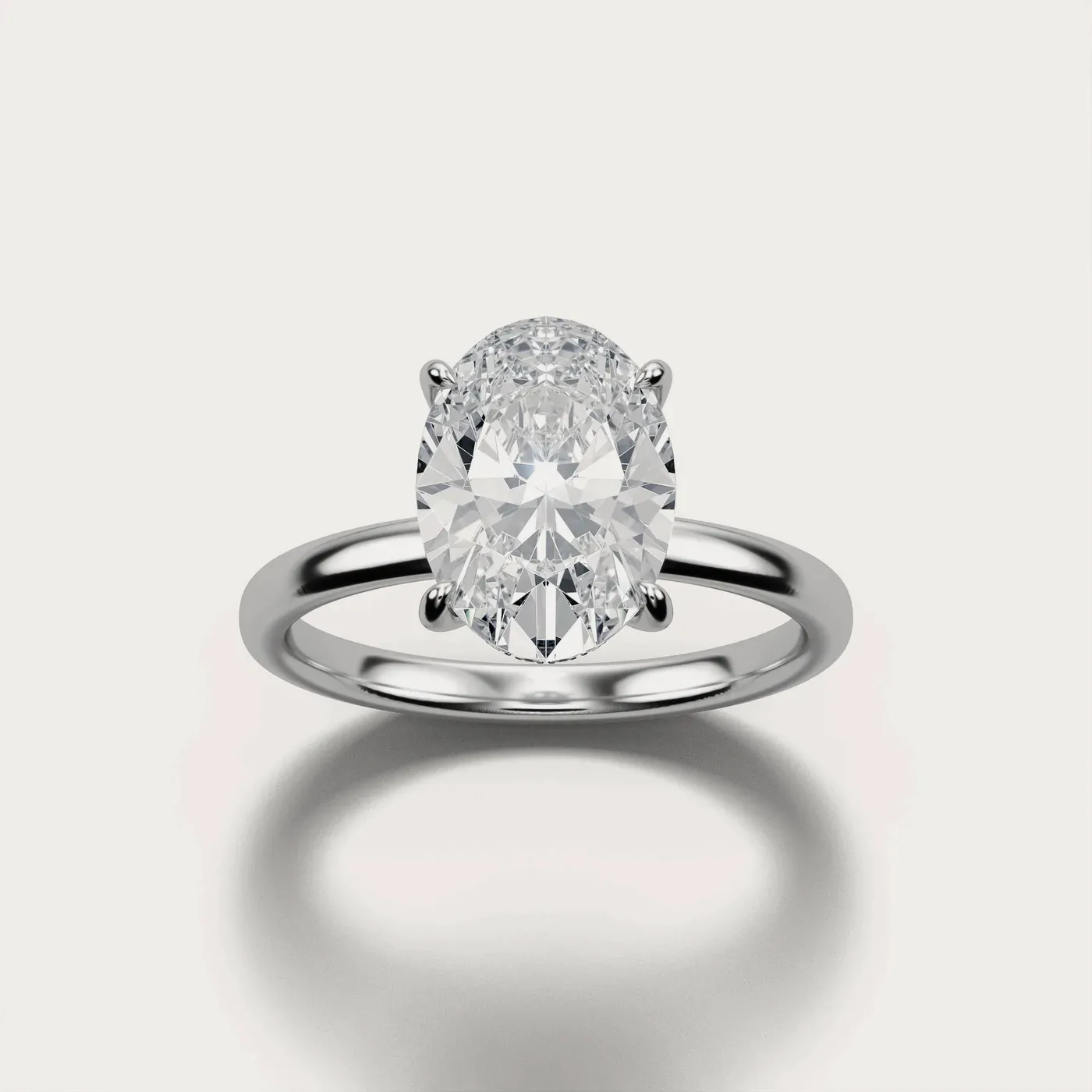
One stone, held up on claws, nothing else competing with it. It is the default for a reason: it puts the maximum amount of light through the stone, it is the cheapest of these to make, and it is the only style that will still look ordinary in thirty years — which, for a ring somebody wears for the rest of their life, is a feature and not an insult.
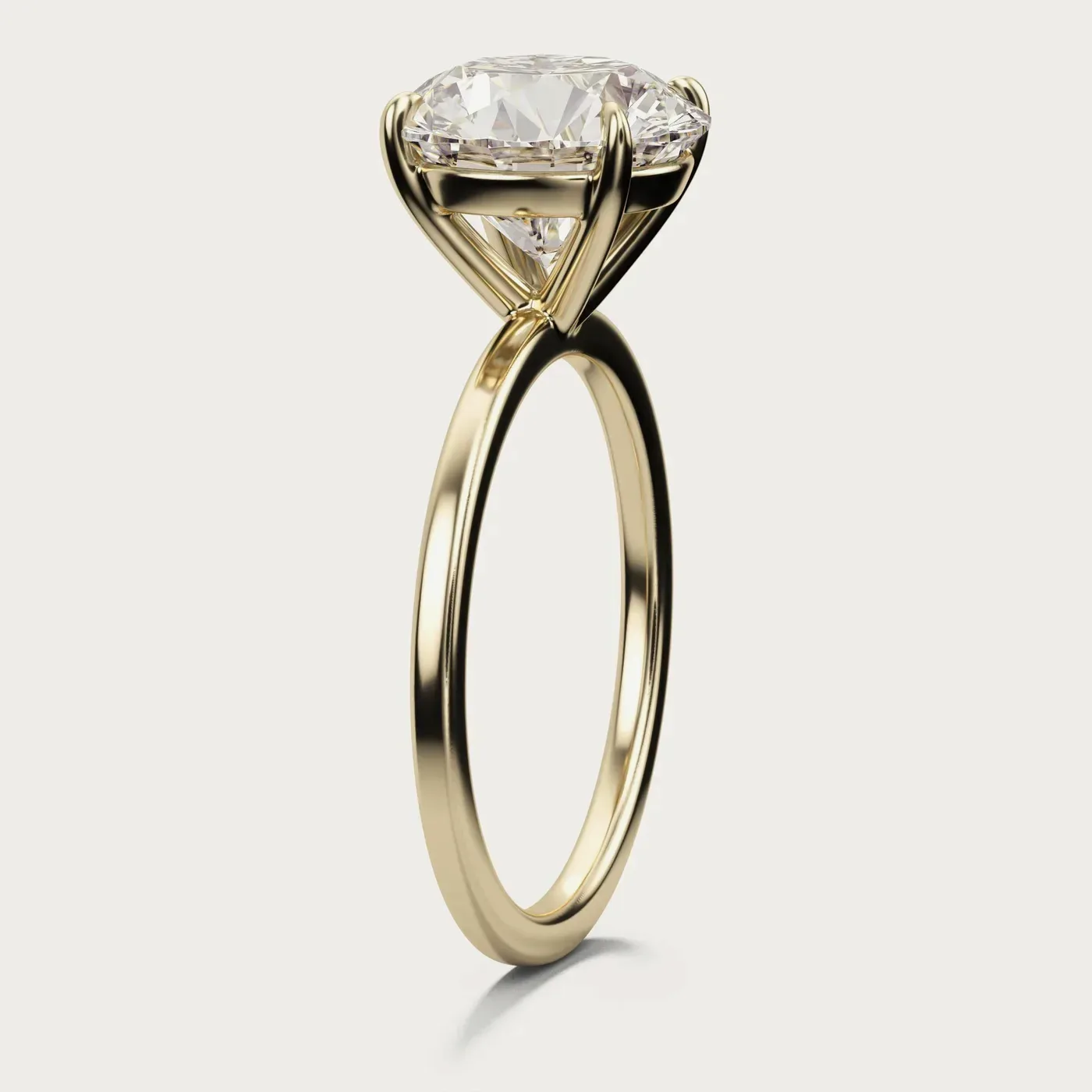
The decisions inside a solitaire are quiet ones. Four claws or six: four shows more of the girdle and reads cleaner, six holds more securely and hides a little more stone. The height of the head, which decides whether a wedding band will sit flush against it. And the shank profile — a knife edge is about a third lighter than a round one of the same width, and looks considerably finer on the hand.
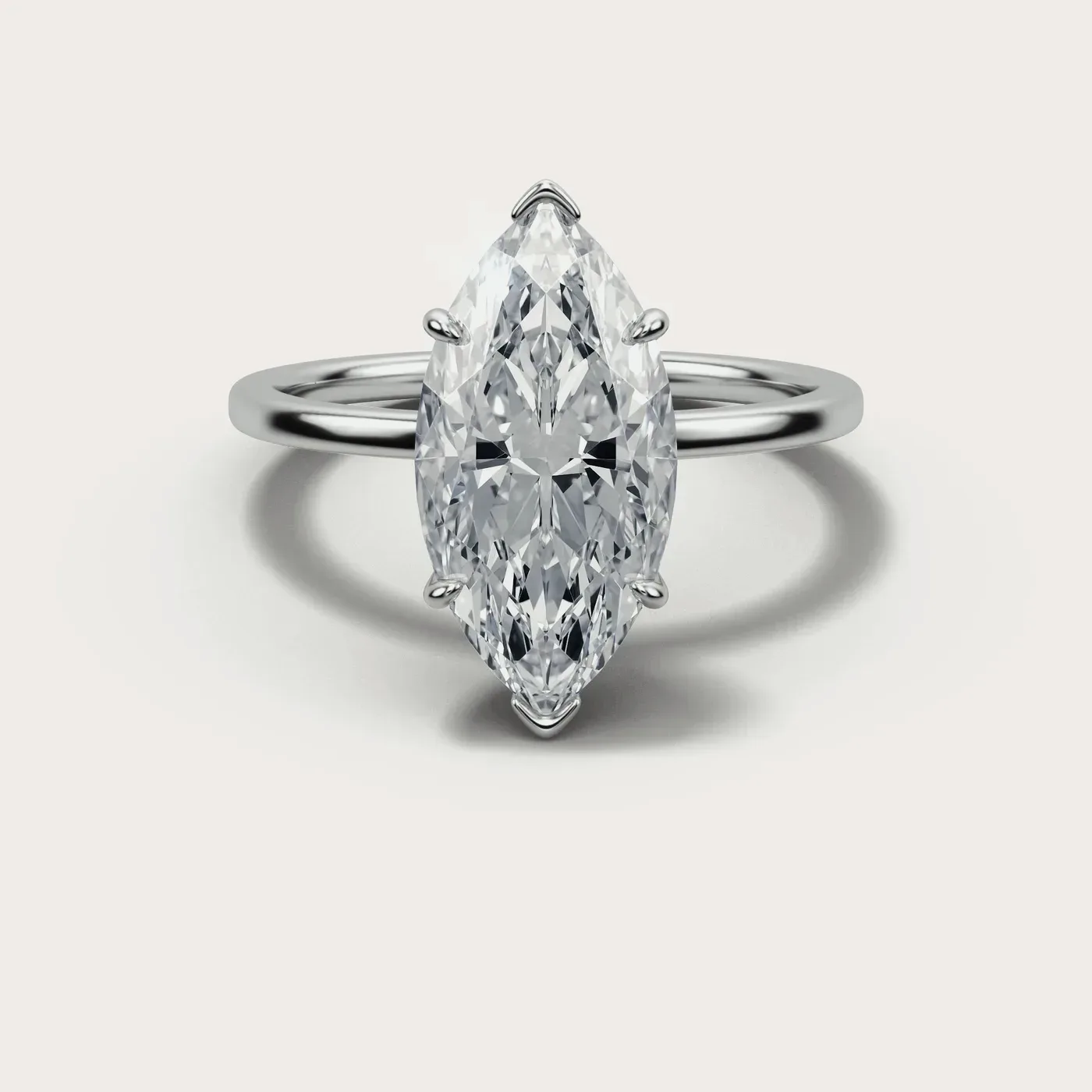
The plainest thing we make, and the piece we use to prove the catalog works: one model, rendered in every stone shape we cut and every metal we set. If you want to see what a shape actually looks like before choosing one, this is where to look.
Eight claws instead of four or six, on a band left entirely plain. Twice the metal at the top of the stone reads as deliberate rather than cautious, and it suits a client who wants the setting itself to be the design.
Halo
A ring of small stones around the center. Its honest purpose is size: a halo makes a stone look substantially larger than it is, and a smaller center in a halo can present as well as a larger one on its own for less money. That is a legitimate trade and it is worth stating plainly rather than dressing up.
What it costs is bench time. Every stone in that ring is a seat cut by hand and a bead raised over it, and the number of stones is the number of chances to get one wrong. It also changes the ring structurally: a halo widens the head, so the wedding band that sits beside it has to be shaped or spaced, and that decision belongs at the design stage rather than two years later.
The classic version: the halo sits on visible claws, so you can see how the stone is held. It reads as jewelry that is not hiding anything, and it is the easier of the two to service.
The same halo with the metal hidden — the small stones appear to touch each other with nothing between them. It is a longer job at the bench and the result is a continuous ring of light rather than a ring of stones.
A halo around the rim rather than around the stone, which is the variation almost nobody asks for by name and a good many people choose once they have seen it.
Hidden halo
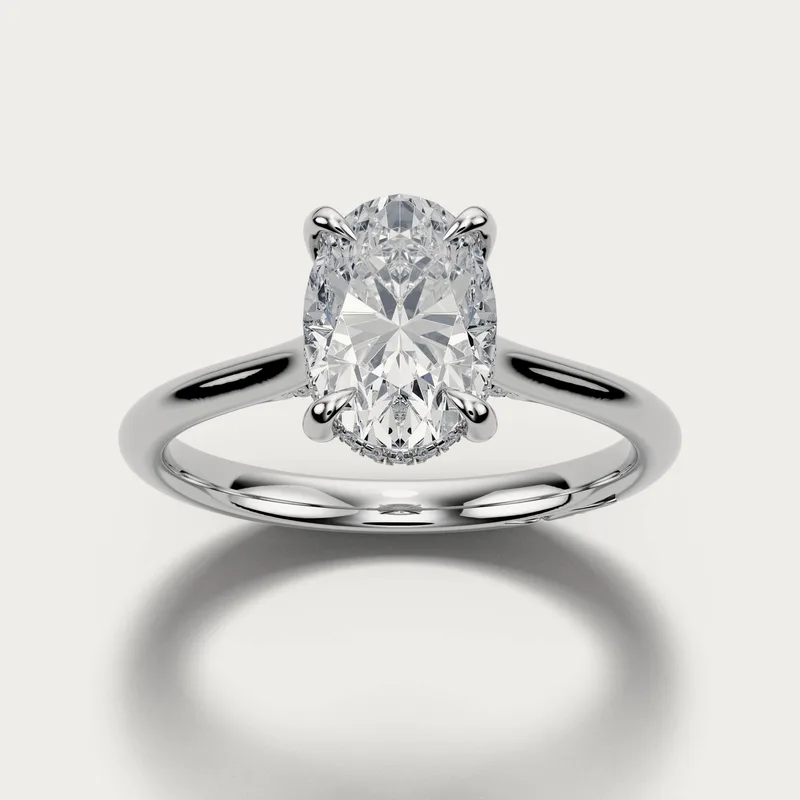
A halo set underneath the center stone, facing outward, invisible from above. From the front the ring is a solitaire. From the side, which is the angle the wearer sees most and everybody else sees least, there is a line of light under the girdle.
It has been the most requested detail of the last few years and it is easy to see why: it adds nothing to the face-up size and does not compete with the stone, so it is decoration that costs the design nothing. It does add height, and a taller head catches on more things.
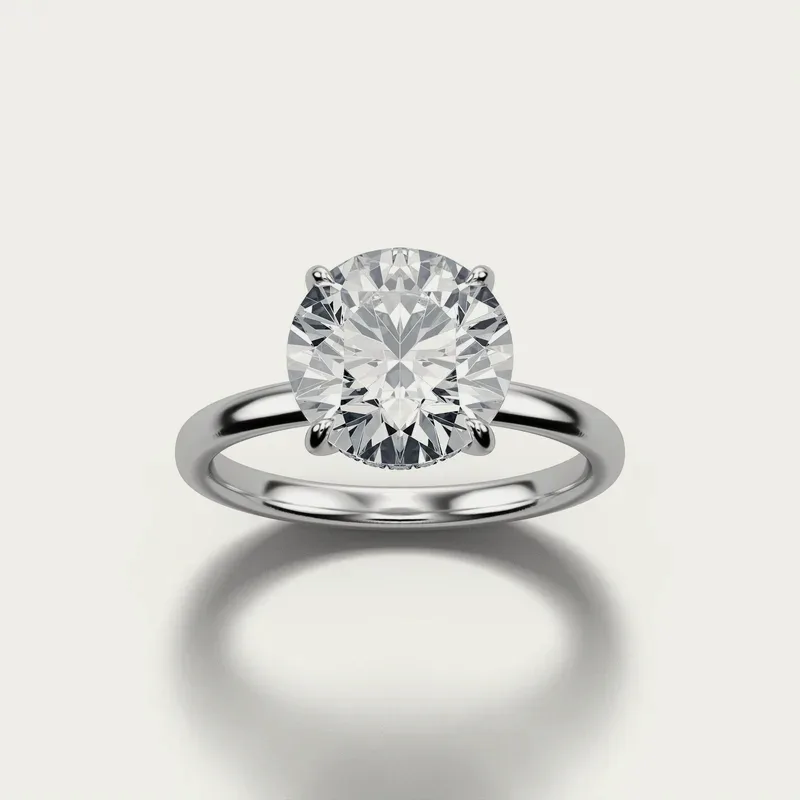
Hidden Halo — the halo you see from the side
The straightforward version, and the one to look at from the side view rather than the top — the top is the point, in that there is nothing to see there.
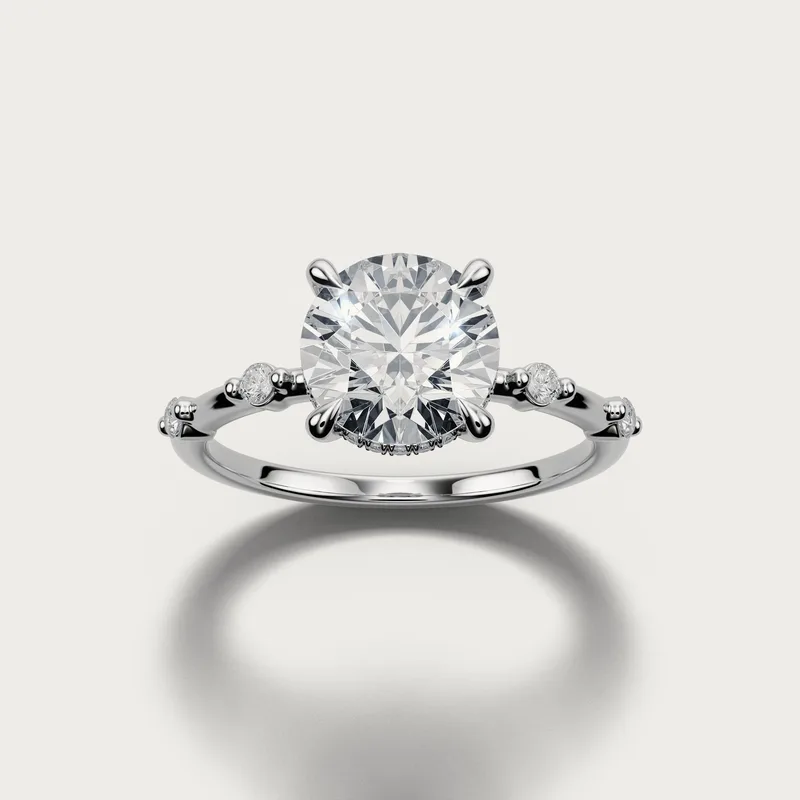
Accent Solitaire — a hidden halo, four stones down the shank
A hidden halo with four stones set down the shank, which is about as much as a piece can carry before it stops reading as a solitaire.
Pavé
Small stones set flush along the shank, held by tiny beads of metal raised from the surface between them. Done well it looks like the metal itself is glittering. Done badly it looks like a row of stones with gaps, and the difference is entirely in the setter.
Two practical things. Pavé running past the halfway point of the shank makes the ring difficult or impossible to resize later, which turns the size on the order form into a permanent decision. And pavé is the style with the highest ongoing maintenance: small stones in beads are the ones that come loose, and a pavé ring wants looking at every year or two by somebody who will tighten a bead before a stone is lost rather than after.
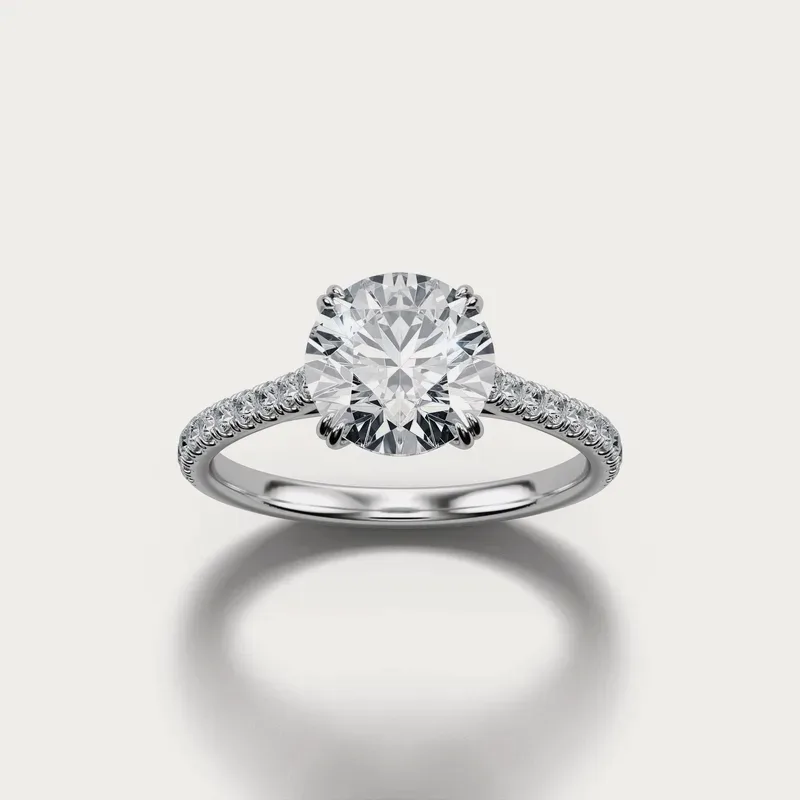
Pavé Solitaire — a solitaire with the shoulders set
The restrained version: a solitaire with the shoulders set and the rest of the shank left plain, which keeps the bottom of the ring resizable and takes nothing away from the effect on the hand.
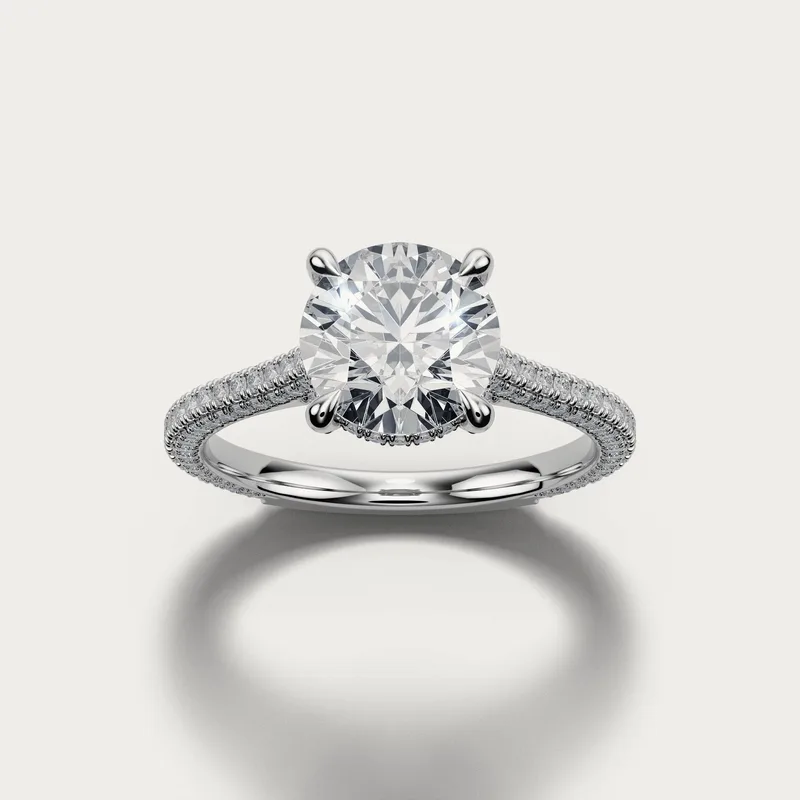
All Diamonds — pavé three rows deep, and a halo underneath
The other end of the same idea — pavé three rows deep with a halo underneath. It is the most stone-intensive piece we make and by some distance the most bench hours.
Elara — a plain band, and everything else underneath
A plain band with everything happening underneath: a halo below the girdle and a short row of pavé across the bridge. From above it reads as a line of light around the stone; from the side it is the piece.
Bezel
A rim of metal wrapped around the stone instead of claws. It is the most secure setting there is, the one that catches on nothing, and the obvious answer for somebody who works with their hands, wears gloves, or has already lost a stone from a claw setting.
The cost is light. A full bezel covers the girdle and part of the crown, so less light enters from the side and the stone reads slightly smaller and slightly darker than the same stone on claws. A partial bezel — metal on two sides, open on the other two — recovers most of that and keeps most of the protection, and it is under-specified relative to how good an answer it is.
A rim instead of claws, done as the whole idea rather than as a compromise. Nothing to catch, nothing to re-tip, and a very clean outline.
Held on two sides and open on the other two: the partial bezel. Most of the security, most of the light, and an outline that looks engineered rather than traditional.
A rim with baguettes down each side — a bezel used as architecture rather than as protection, which is the version that suits a client who finds a plain solitaire too quiet.
The ones without a common name
Not every design is a variation on a term a client will already know, and the pieces that are not tend to be the ones that get remembered. They are also the hardest to sell from a description, which is the argument for showing rather than telling.
The shank comes up and over the stone rather than stopping under it. It is the piece people pick up first at a counter, and it takes a modeller who has thought carefully about where the wedding band goes.
Two strands twisted around each other with one of them set. Simple to describe, unusually fiddly to make, and it photographs far better in motion than in a still.
How to actually use this
Style names are a starting vocabulary, not a specification. Two rings can both be honestly described as a "pavé halo" and be different objects — different stone counts, different shank widths, different head heights, one resizable and one not. The word gets a conversation started and then stops being useful.
What ends the conversation is a picture of the actual ring, in the actual metal, with the actual stone shape. Every piece linked above has been modeled once and rendered in each shape and metal it is offered in, from four cameras, so that is available before anybody commits to anything — and because the model already exists, there is no CAD fee on it and the price comes from the model’s own weight rather than from a quote.
If none of these is the piece, the same benches make one that does not exist yet. But it is worth being sure, because starting from something already drawn is faster, cheaper and considerably less risky than starting from a sentence.
Written by AurumFlow
The managed platform for jewelry production.