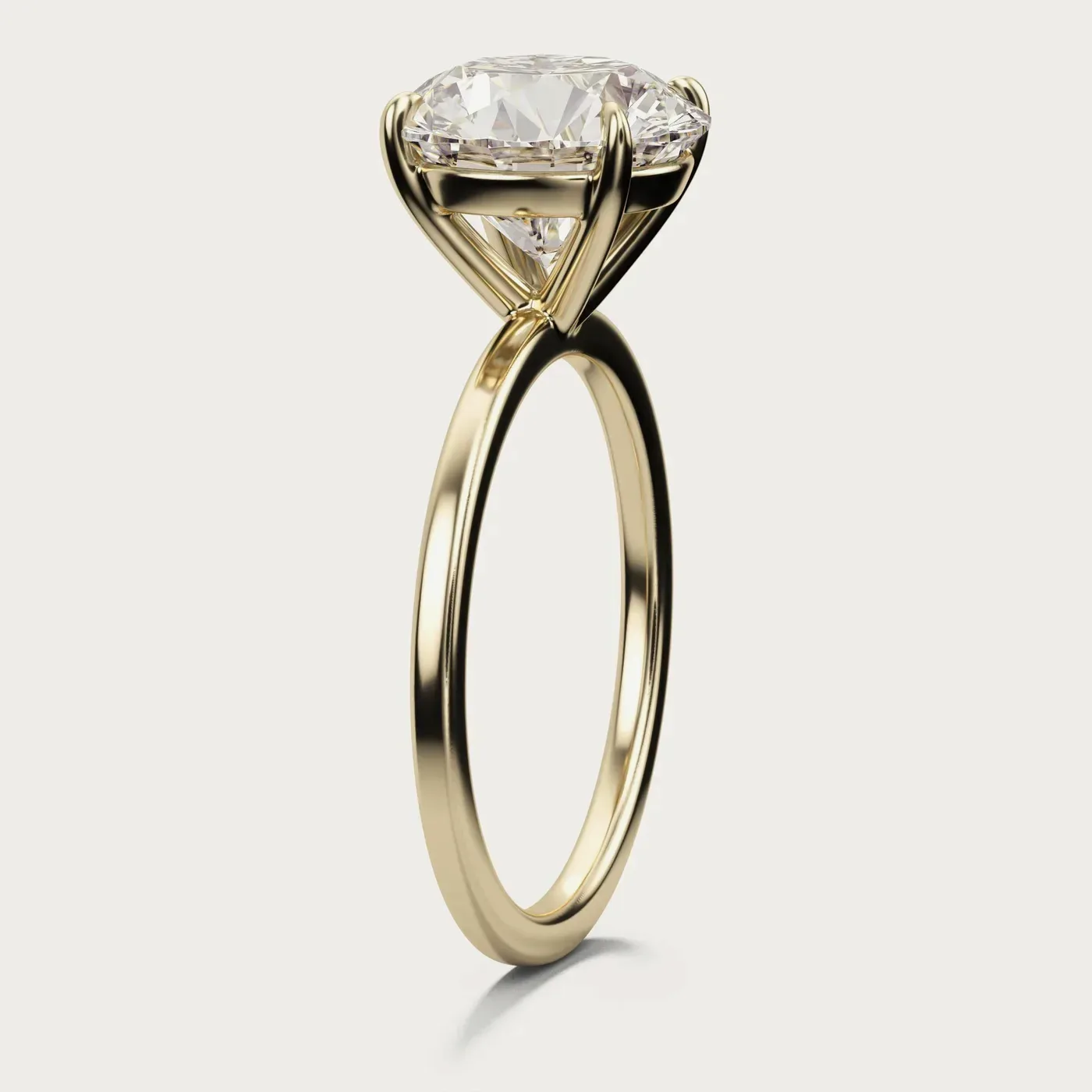
Which diamond shape looks biggest? One ring, thirteen ways
A carat is a weight, not a size. Two one-carat stones can differ by a fifth in face-up spread — here is the same solitaire in thirteen shapes to prove it.
AurumFlow
September 10, 2026 · 5 min read
Every jeweler has had this conversation. A client has a number in their head — one carat, a carat and a half — and they arrive believing it describes how big the ring will look. It does not. A carat is a unit of weight, one fifth of a gram, and two stones of identical weight can differ by around a fifth in the area they actually cover on a finger. The number on the certificate and the thing you see across a dinner table are related, but they are not the same measurement.
This is not a small effect and it is not a matter of taste. It is geometry, and it is worth being able to explain in one sentence to somebody who is about to spend a lot of money.
Weight hides underneath
A cut stone is two halves. Above the girdle is the crown, which is what you look at. Below it is the pavilion, which is where most of the mass lives and which disappears into the setting the moment the stone is set. Weight put into the pavilion is weight you paid for and cannot see.
Shapes differ in how much of their weight they are obliged to carry down there. A square outline with a deep pavilion — a princess, an Asscher — is efficient at holding weight and inefficient at showing it. An elongated outline spreads the same weight across a longer surface, so more of it ends up above the girdle where the light and the eye are.
Cut proportions move this too, and they move it a long way: a deep round and a shallow round of the same weight are not the same size face-up, and the shallow one will usually be the duller of the two. So treat what follows as the shape’s tendency rather than a promise about a particular stone.
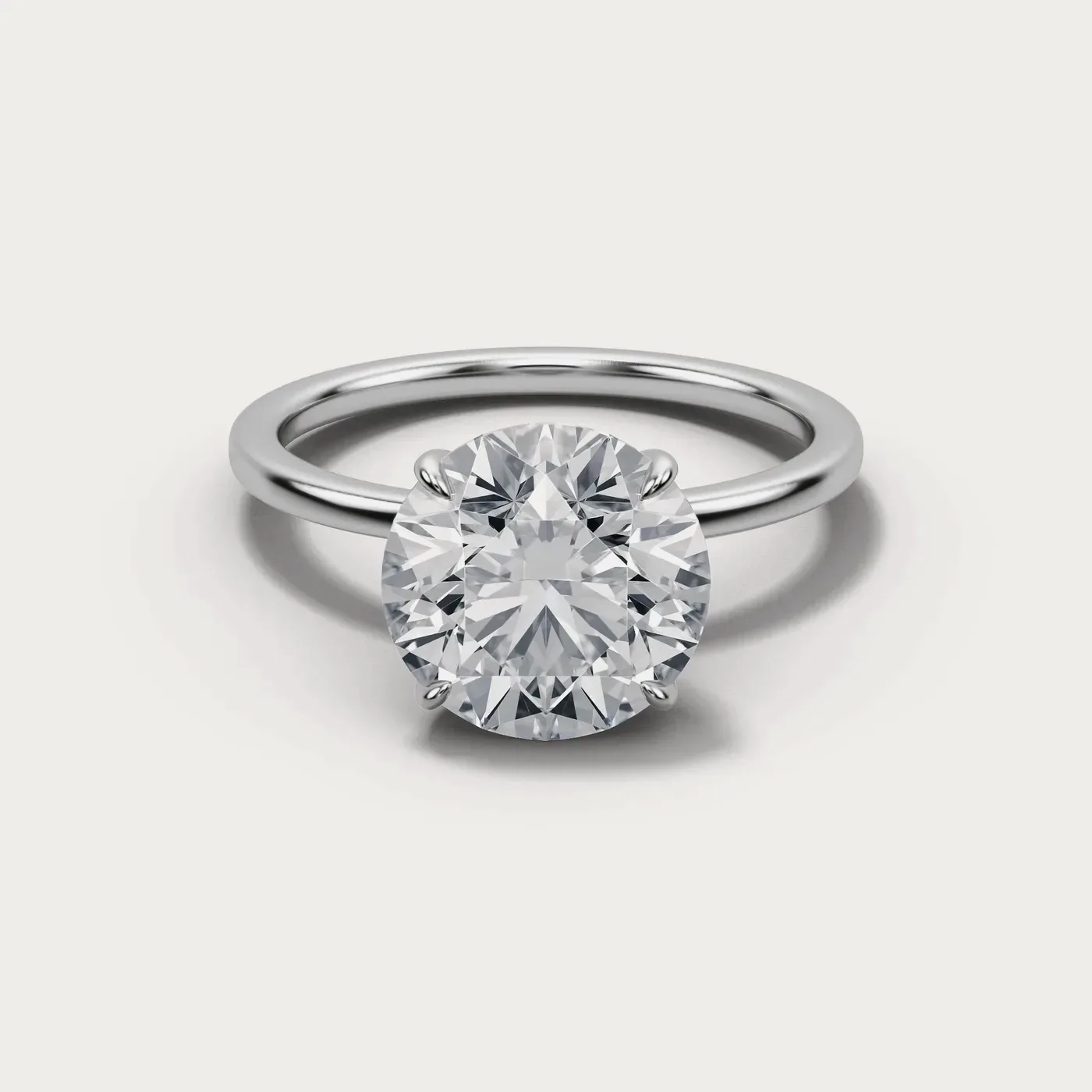
Round
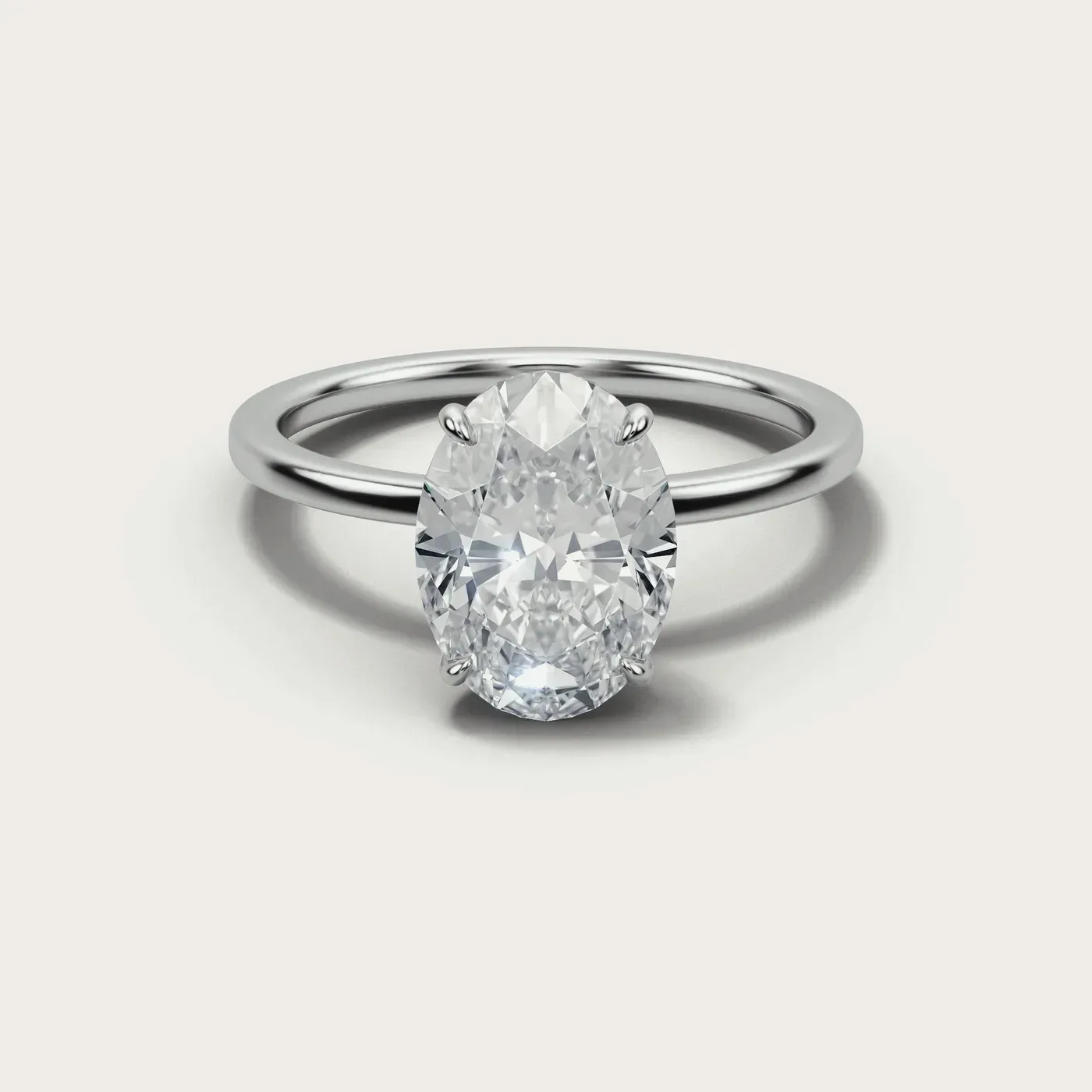
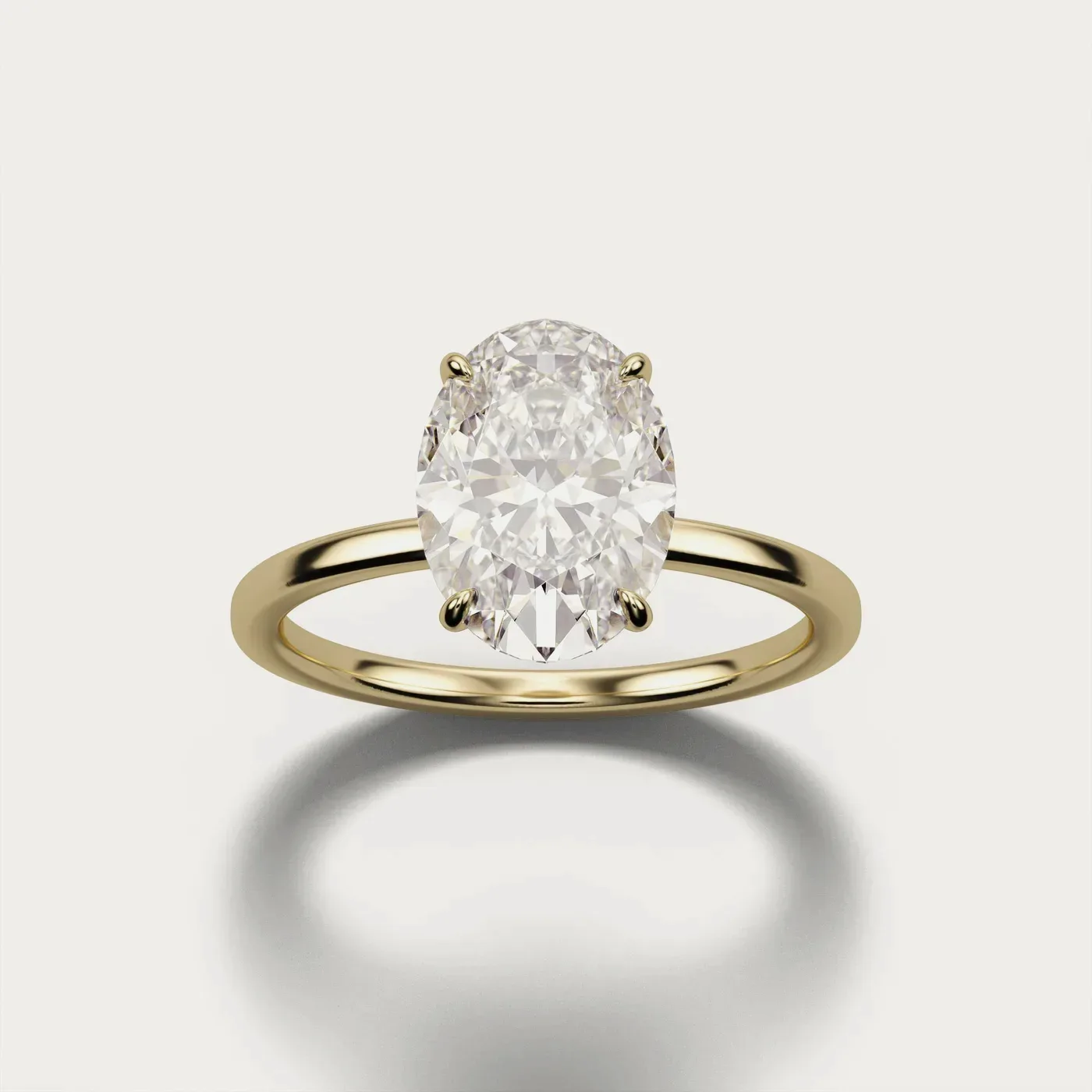
Oval
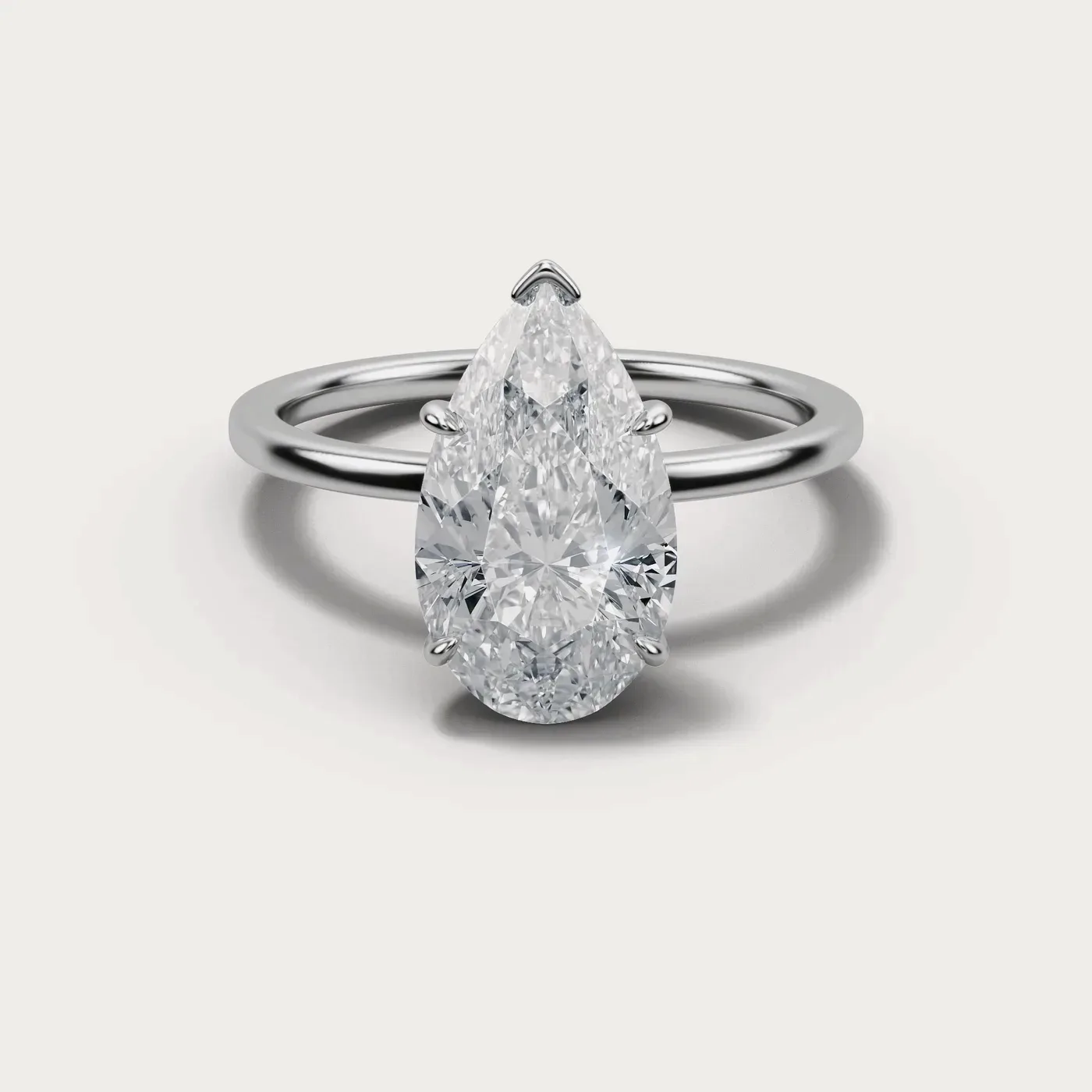
Pear
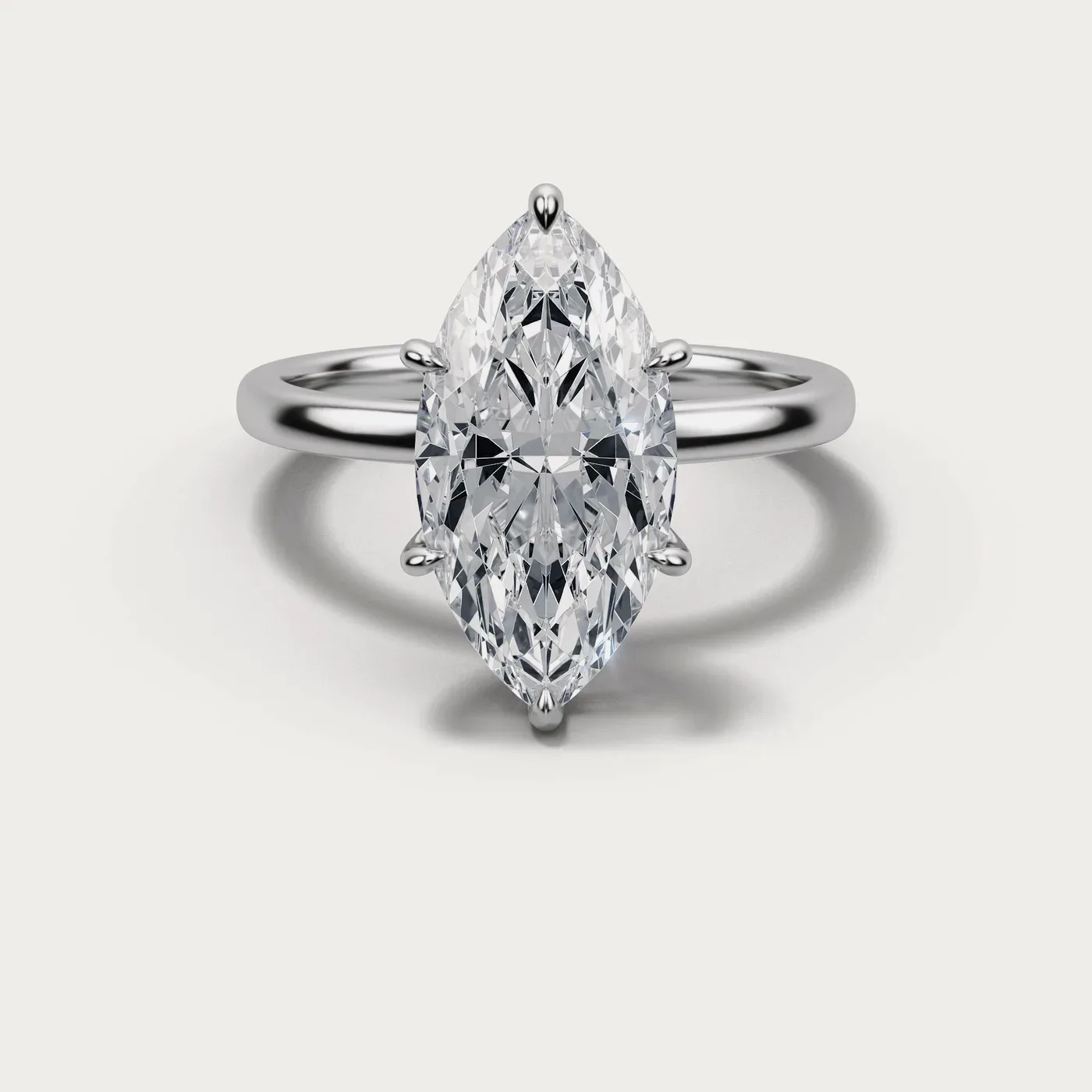
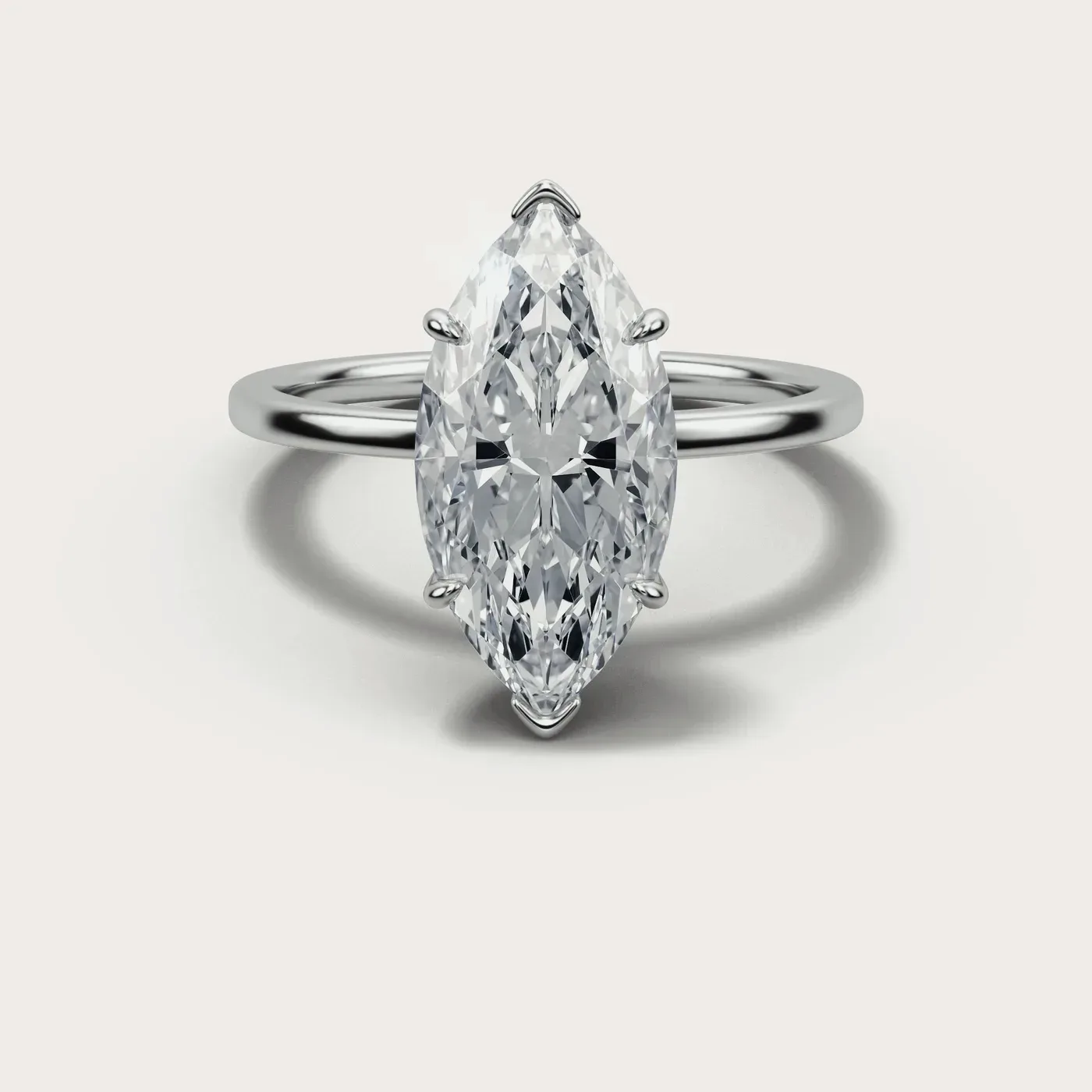
Marquise
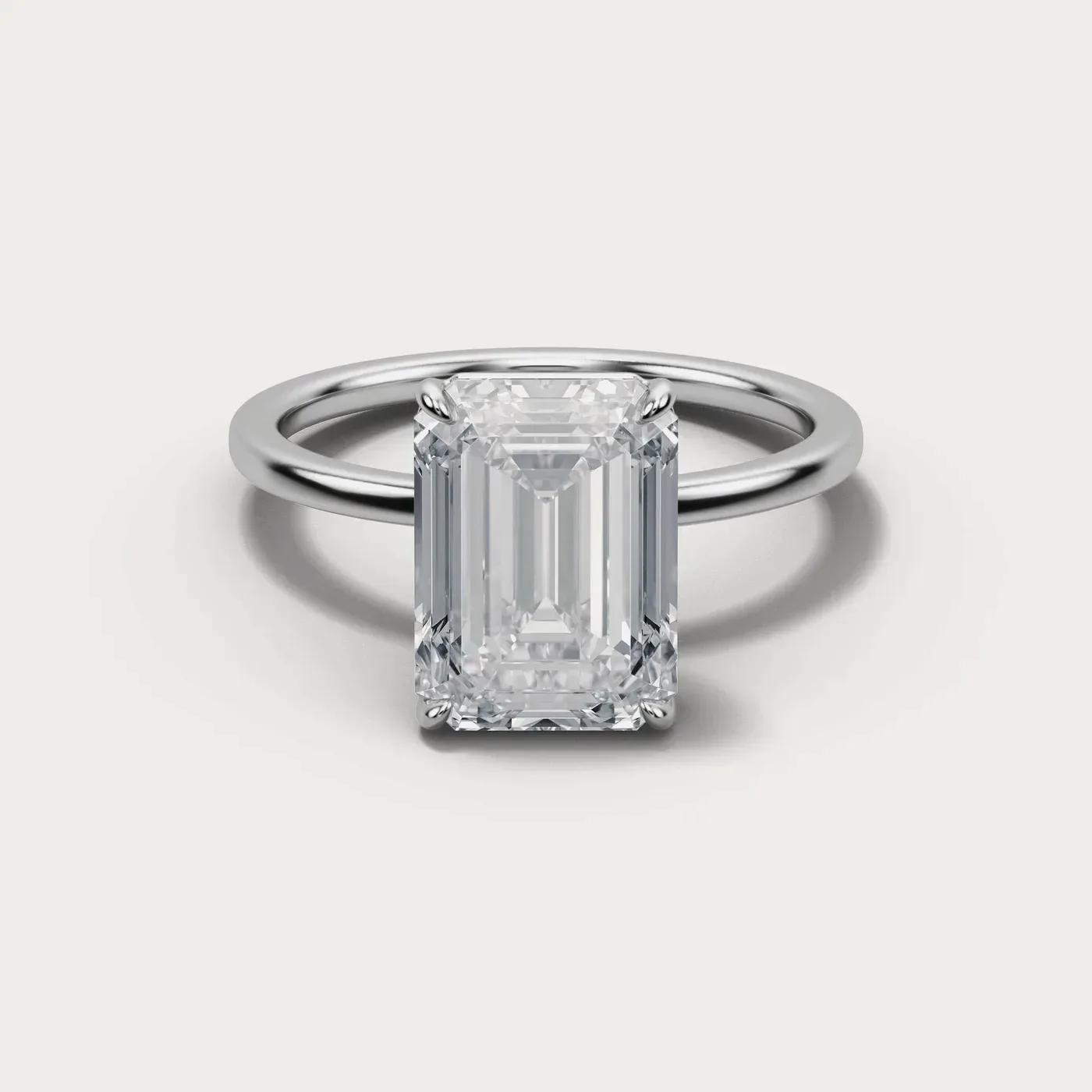
Emerald
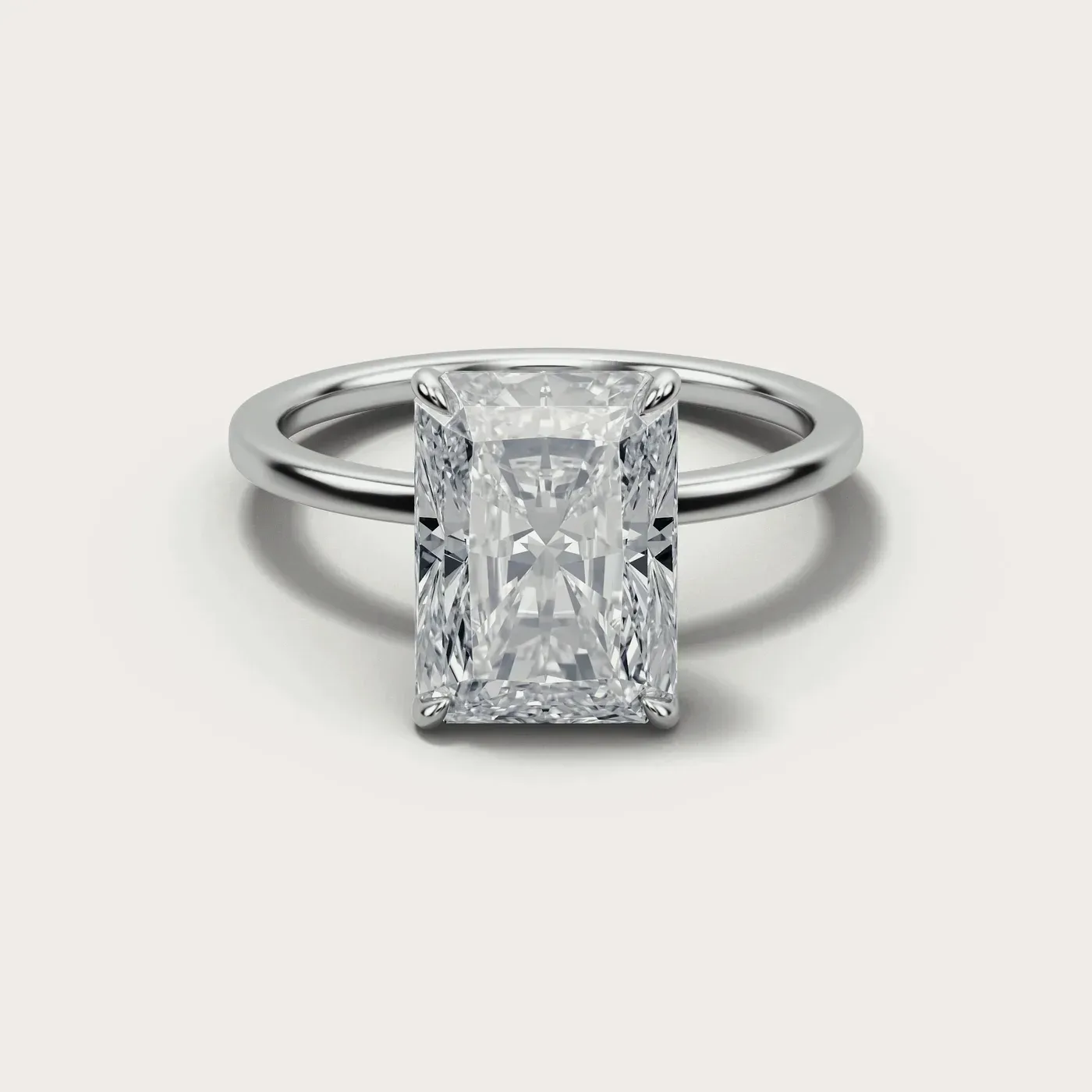
Radiant
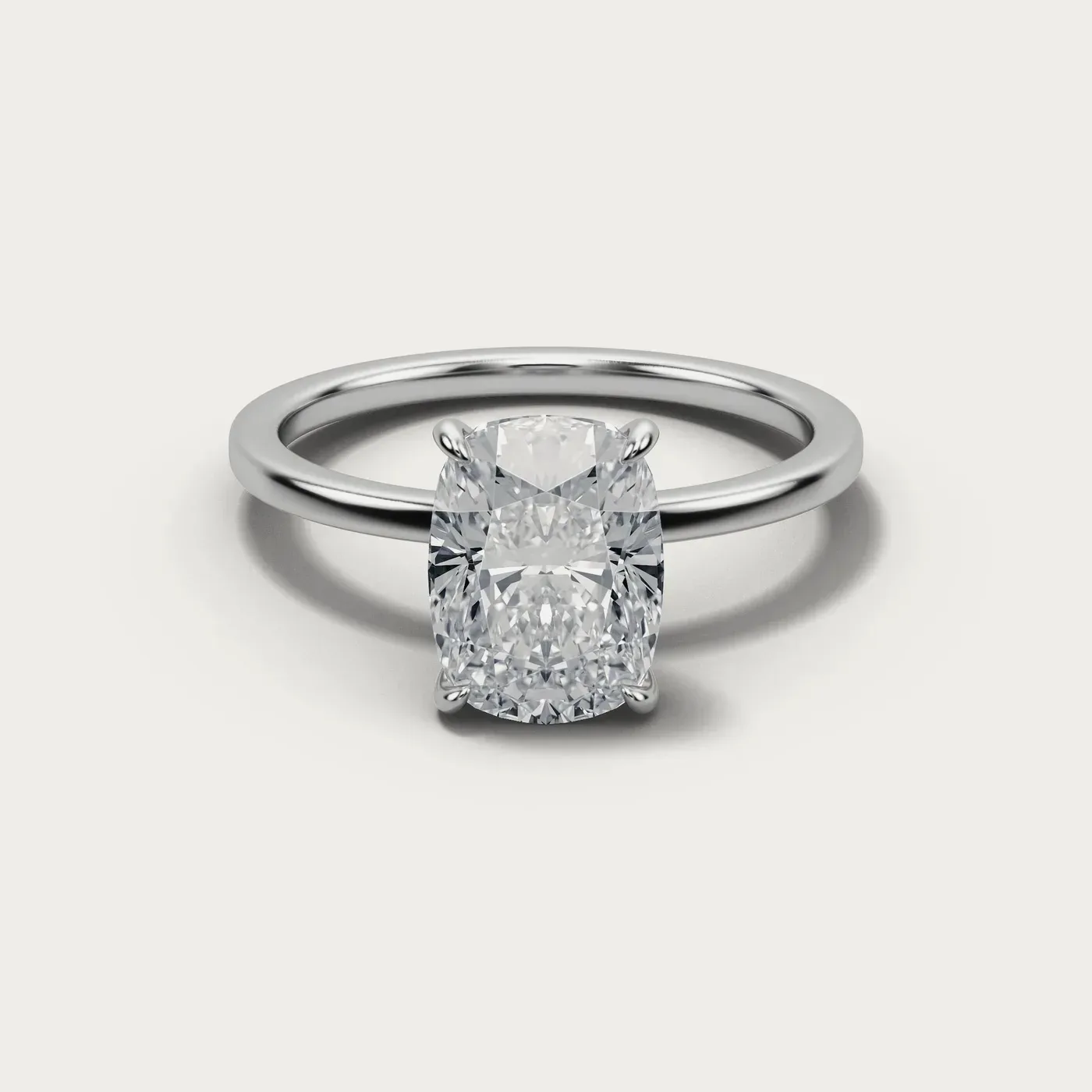
Elongated cushion
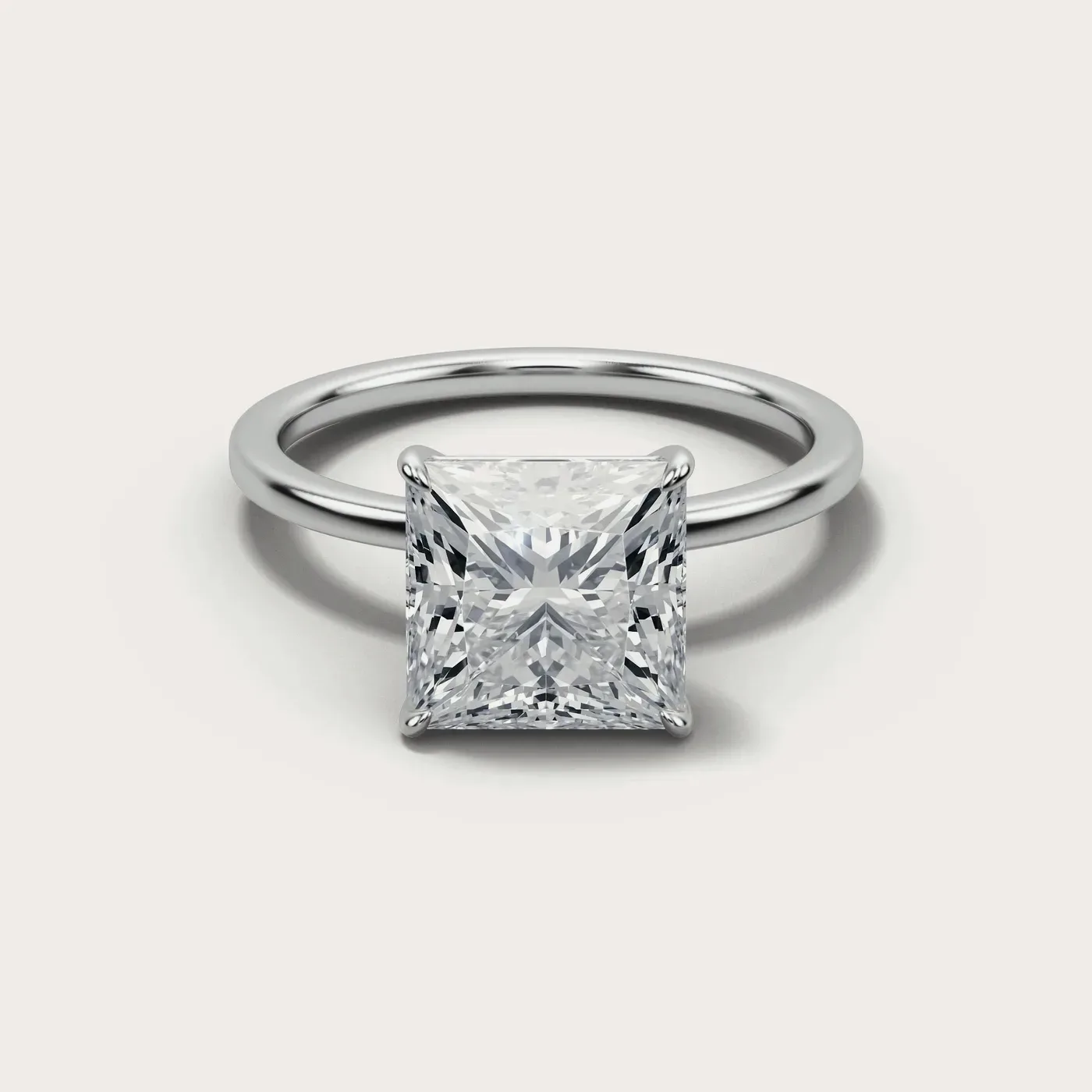
Princess
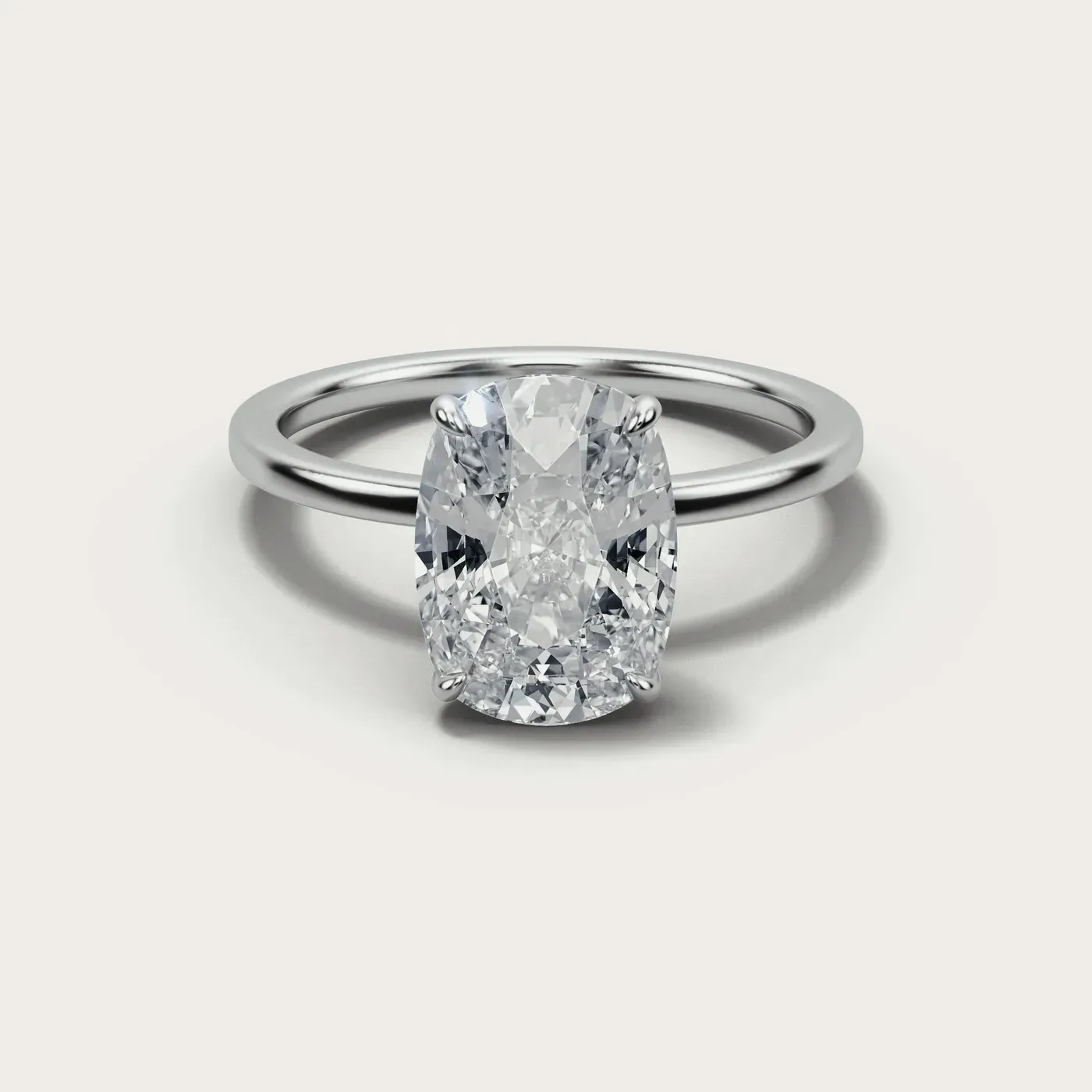
Cushion
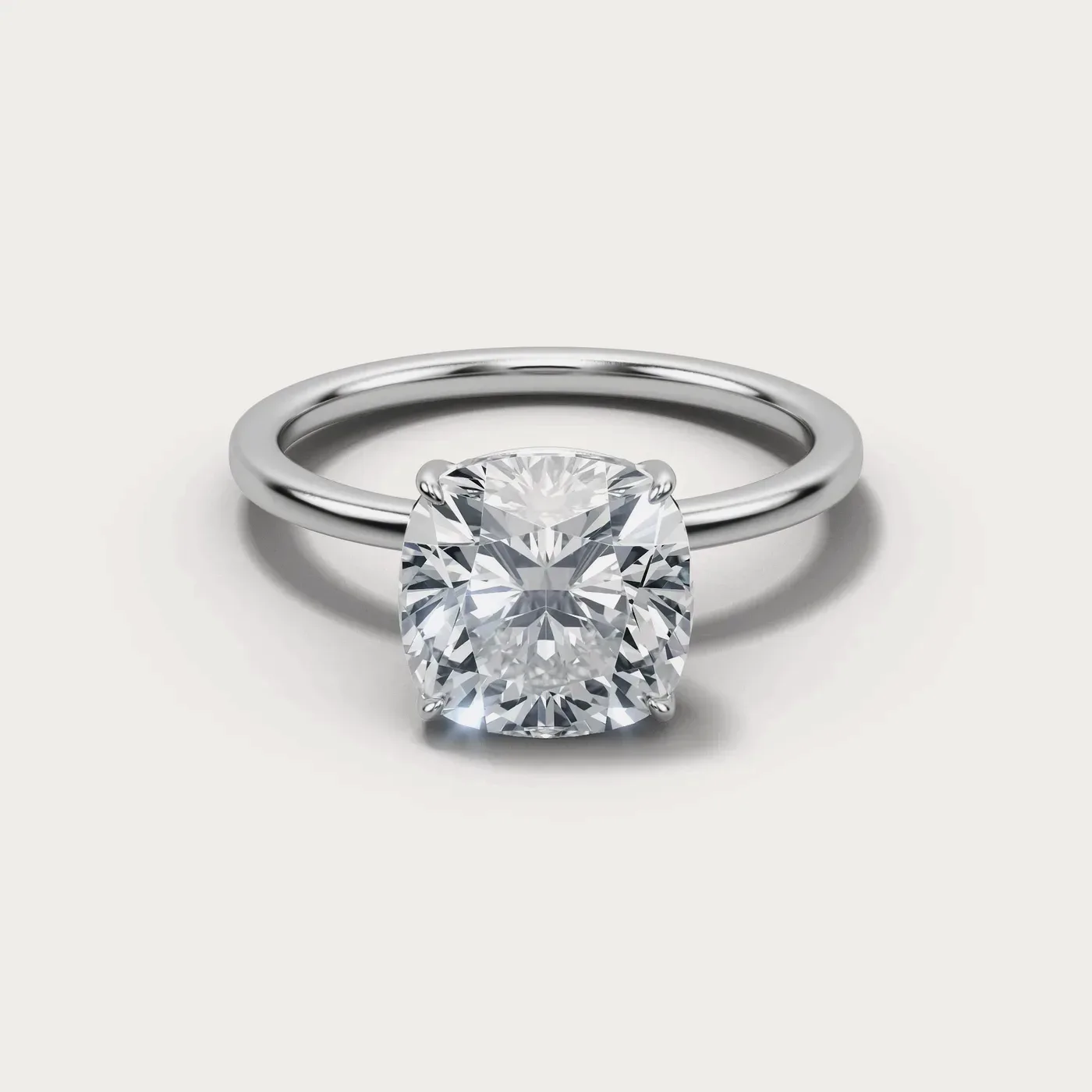
Cushion square
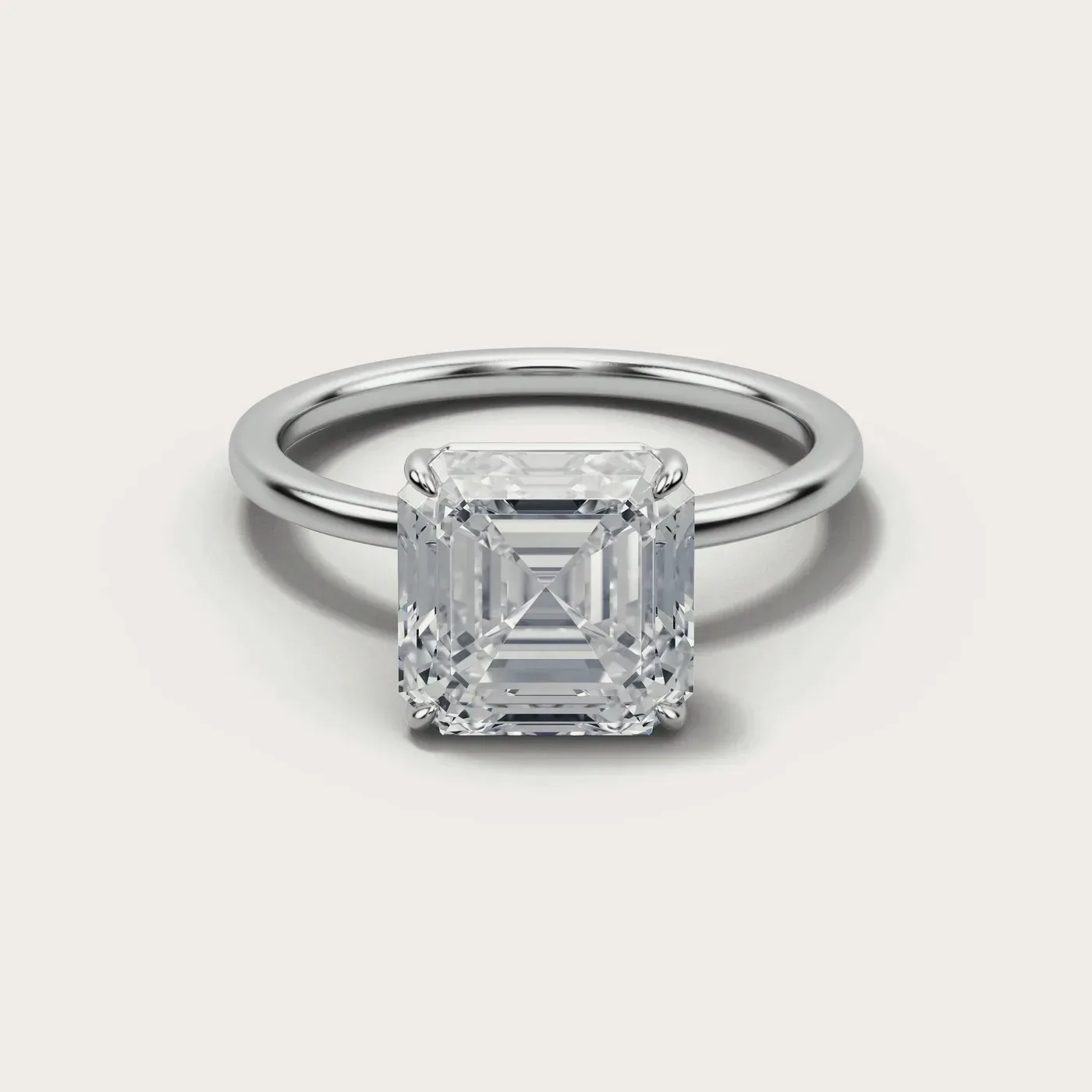
Emerald square
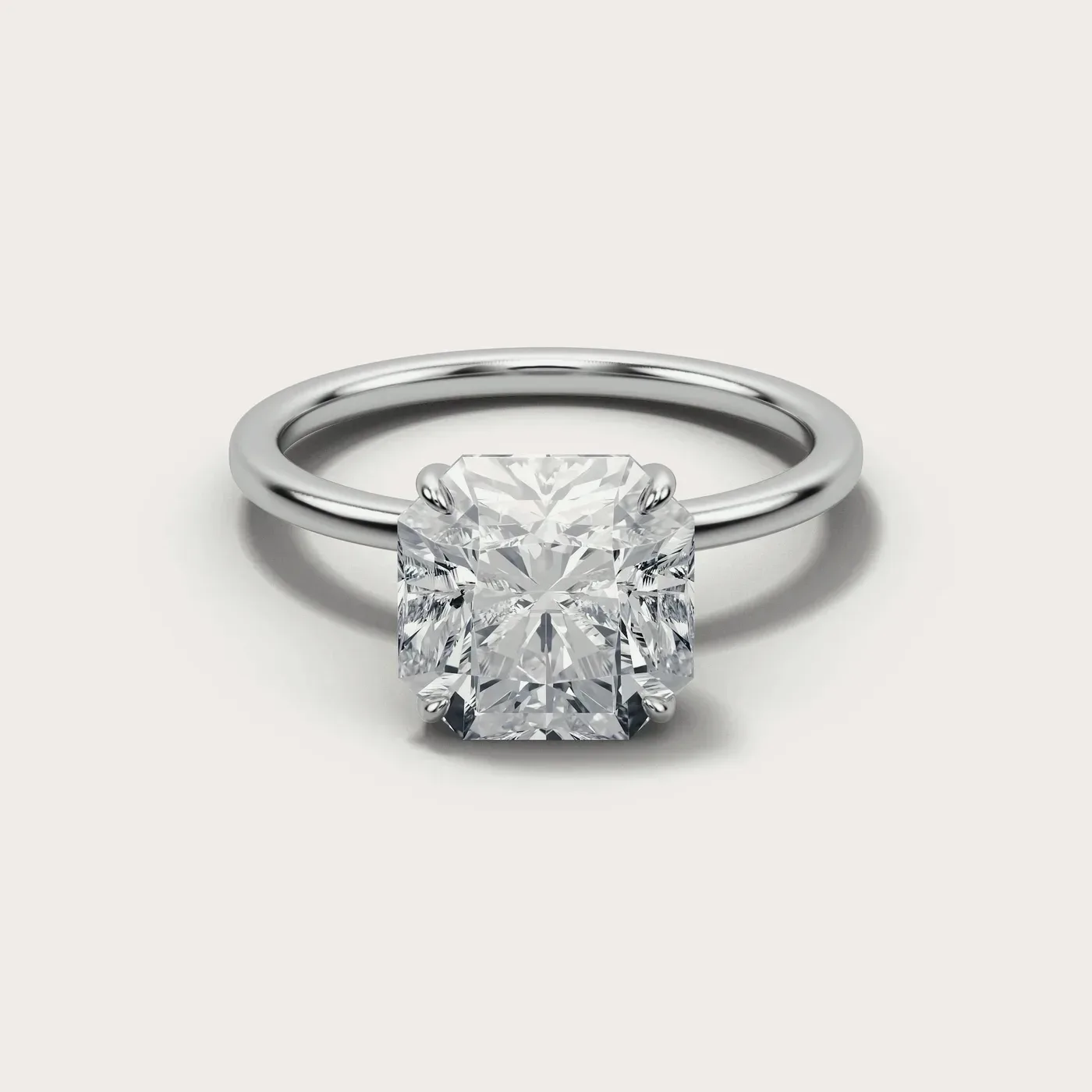
Radiant square
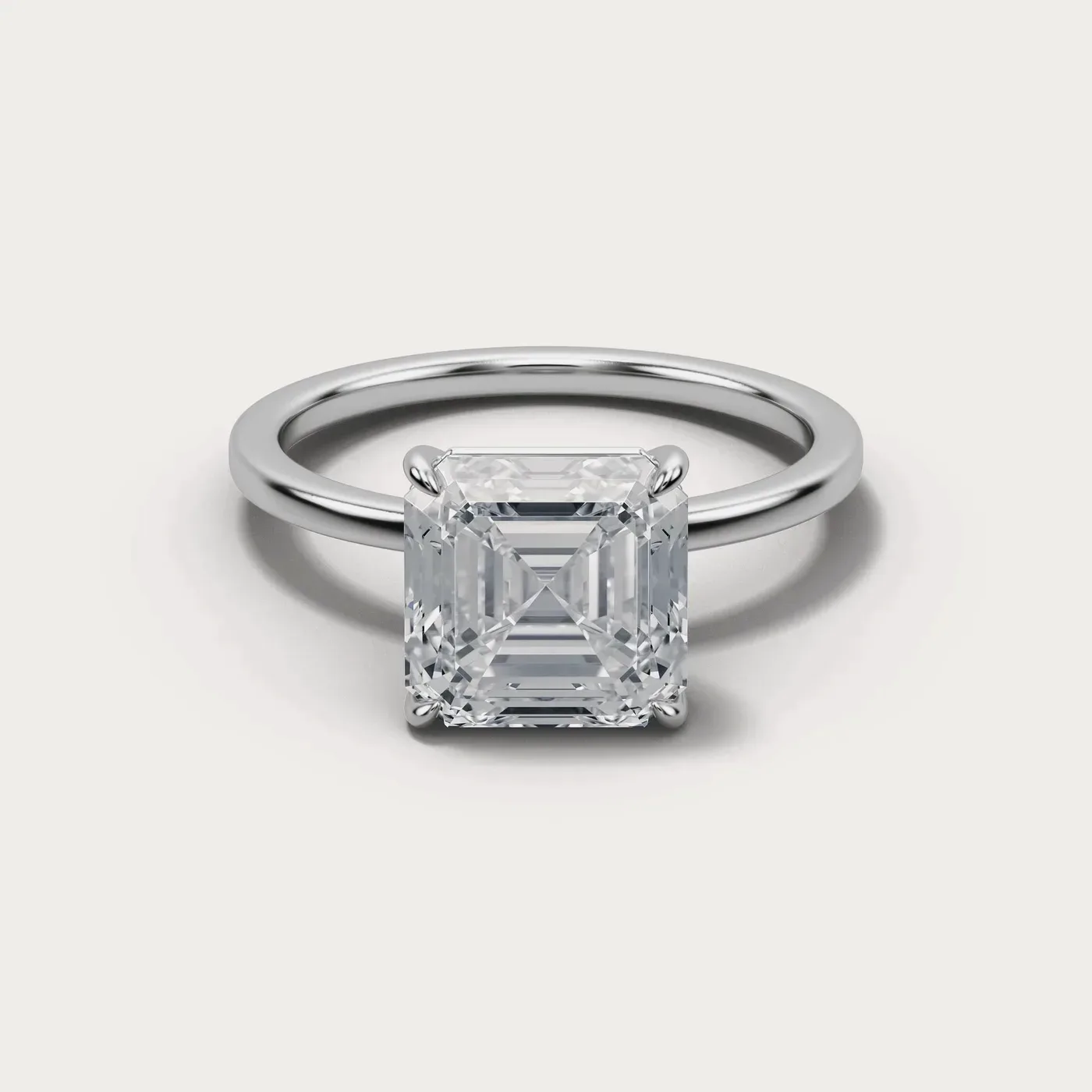
Asscher
What the eye reads as large
Marquise first, by a distance. A marquise at one carat runs about ten millimeters along the finger against a round’s six and a half, and because it points along the finger rather than across it, the whole hand reads longer. It is the shape that buys the most apparent size per carat, and the one most often talked out of by people who last saw one in 1988.
Then oval and pear, which get most of that effect with far less commitment. An oval is roughly eight by six where a round is six and a half across: noticeably longer, still soft, and by some distance the most requested elongated shape of the last few years.
Emerald cuts are the quiet surprise. A step cut has a big open table and a shallow pavilion, so it spreads generously — an emerald reads larger than a round of the same weight — but it does not sparkle the way a brilliant does, and a large calm stone can read smaller than a small busy one at a distance. Big and quiet is a real aesthetic, and it is not for everybody.
At the other end, the squares. Princess, cushion square and Asscher hold their weight in depth, and a one-carat Asscher is about five and a half millimeters across against a round’s six and a half. That is a full millimeter — around fifteen percent of the width — for the same money and the same certificate.
| Shape | Typical at 1 ct | How it reads |
|---|---|---|
| Marquise | 10.0 × 5.0 | The largest spread per carat; lengthens the finger |
| Pear | 8.0 × 5.5 | Nearly as much spread, softer outline |
| Oval | 7.7 × 5.7 | Longer than a round, still classic |
| Emerald | 7.0 × 5.0 | Large and calm — spread without the sparkle |
| Round | 6.5 × 6.5 | The benchmark, and the most brilliance |
| Radiant | 6.2 × 5.4 | A square outline that behaves like a brilliant |
| Cushion | 5.8 × 5.8 | Soft corners, weight carried in the depth |
| Princess | 5.5 × 5.5 | Compact face-up for the weight |
| Asscher | 5.5 × 5.5 | The smallest spread of the thirteen |
What each shape costs you elsewhere
Spread is one axis and it is the one everybody optimizes. There are three others that decide whether somebody still likes the ring in five years.
Points are fragile. A marquise and a pear both end in a tip that will chip if it is left proud, so both want a V-prong over the point — which is bench work, and which slightly covers the end of the stone you were buying for its length. Princess corners are the same problem in a different place.
Step cuts show everything. An emerald or an Asscher has a large open table and no field of sparkle to hide behind, so inclusions and body color that would vanish in a round are simply visible. The shape is cheaper per carat and then asks for a higher clarity and color grade, which is a large part of the saving back again.
And elongated brilliants have bow-ties. A dark band across the middle, at right angles to the length, caused by the stone shadowing itself. Every oval, marquise and pear has one; on a well-cut stone it is faint enough to ignore and on a badly cut one it is the first thing you see, and no photograph taken by a seller will show it. This is the single best reason to look at an elongated stone in person or on a video, not a still.
The one place the arithmetic favors you
Rounds cost the most per carat, and it is not fashion. Cutting a round wastes more of the original crystal than any other shape, and the yield lost is priced in. Fancy shapes — the trade’s word for everything that is not round — are cut from rough more efficiently and generally sell for less per carat.
Which produces the one genuinely free lunch in this whole subject: an oval both looks larger than a round of the same weight and usually costs less per carat than one. If a client’s brief is "as big as possible for the money", that sentence is most of the answer, and it takes ten seconds to say.
Look at it in the setting it is going into
One thing the grid above cannot do is tell you which of these you like, and a chart of millimeters is a worse guide than it looks. A shape changes character depending on what is around it: the same oval reads elegant on a plain shank and heavy inside a halo, and a pear that looks enormous in isolation can be swallowed by a wide band.
Which is the argument for how our catalog is built. Every design is modeled once and then rendered in each stone shape and metal it is offered in, from the same four cameras, so choosing a shape is a matter of looking at the actual piece rather than imagining one. That is also why there is no CAD fee on a catalog piece: the work of drawing it in your shape has already been done.
Bring a client a picture of the ring they are buying, in the shape they are considering, before anything is cast. It closes more orders than a chart does, and it is the cheapest thing in this entire process.
Written by AurumFlow
The managed platform for jewelry production.