Casting house vs CAD designer vs design studio: who does what
Three ways to get a custom piece made, and what each one is responsible for — the model, the metal, the stones and the inspection.
AurumFlow
October 27, 2026 · 4 min read
Outsourcing a custom piece used to mean finding two or three specialists and passing files between them. That still works, and for some jewelers it is the right arrangement. It helps to be precise about what each of them does, and about which questions to settle before the first job — because that is where custom orders go wrong.
What does each one do?
- Job
- You send
- Design studio
- An idea, a sketch, a photo or a model
- CAD designer
- An idea, a sketch, a photo
- Casting house
- A finished, castable model
- Job
- You get
- Design studio
- A finished, inspected piece
- CAD designer
- A model file and renders
- Casting house
- A cast piece, often set and finished
- Job
- Checks the model can be cast
- Design studio
- Before you see the model
- CAD designer
- Varies; ask
- Casting house
- Varies; ask
- Job
- Sets the stones, polishes
- Design studio
- Yes
- CAD designer
- No
- Casting house
- Varies; ask
- Job
- Inspects the finished piece
- Design studio
- Yes, against the approved model
- CAD designer
- No
- Casting house
- Their own QC
- Job
- When a casting fails
- Design studio
- At AurumFlow, remade at our cost
- CAD designer
- Varies; ask
- Casting house
- Varies; ask
- Job
- People you deal with
- Design studio
- One
- CAD designer
- One, plus a caster
- Casting house
- One, plus a modeler
| Job | Design studio | CAD designer | Casting house |
|---|---|---|---|
| You send | An idea, a sketch, a photo or a model | An idea, a sketch, a photo | A finished, castable model |
| You get | A finished, inspected piece | A model file and renders | A cast piece, often set and finished |
| Checks the model can be cast | Before you see the model | Varies; ask | Varies; ask |
| Sets the stones, polishes | Yes | No | Varies; ask |
| Inspects the finished piece | Yes, against the approved model | No | Their own QC |
| When a casting fails | At AurumFlow, remade at our cost | Varies; ask | Varies; ask |
| People you deal with | One | One, plus a caster | One, plus a modeler |
When is a freelance CAD designer the right call?
When you have a casting house you trust and a bench of your own, and what you are missing is the model. A good freelance modeler is fast and often excellent. The thing to settle up front is castability: a model can look perfect on screen and still have walls too thin to fill, seats that do not fit the stone, or a surface that is not closed. Agree who checks for that, and who pays if a casting fails, before the first file changes hands.
When should you go straight to a casting house?
When you already have a castable file — your own, or one you have used before — and you mainly need metal. A good casting house knows its alloys, its trees and its finishing better than anybody, and many set and polish as well. What varies is the scope: ask what is included, and how the finished piece is checked before it comes back to you.
When is a design studio worth it?
When you would rather deal with one person from the brief to the finished ring, and have that person answer for all of it. A studio takes the idea, models it, checks it for casting before you see it, prices it from the model, has it cast and set, inspects it, and ships it. The trade-off is that the studio chooses the casting house; what you get back is one price in writing and one party to call.
How does AurumFlow fit?
AurumFlow is a New York jewelry design studio for jewelers. You send a photo, a sketch or a file; your designer sends back a model in 1–2 business days, checked for casting, with one price in writing; and once you approve, the piece is made in 5 business days by casting houses in the United States that we work with directly. Every piece is inspected before it ships — size, weight, karat stamp, finish, every stone counted and photographed — and if it falls short, it is remade at our cost.
There is no commission and no platform fee for jewelers, no minimum, and a design you have paid for is yours, files included.
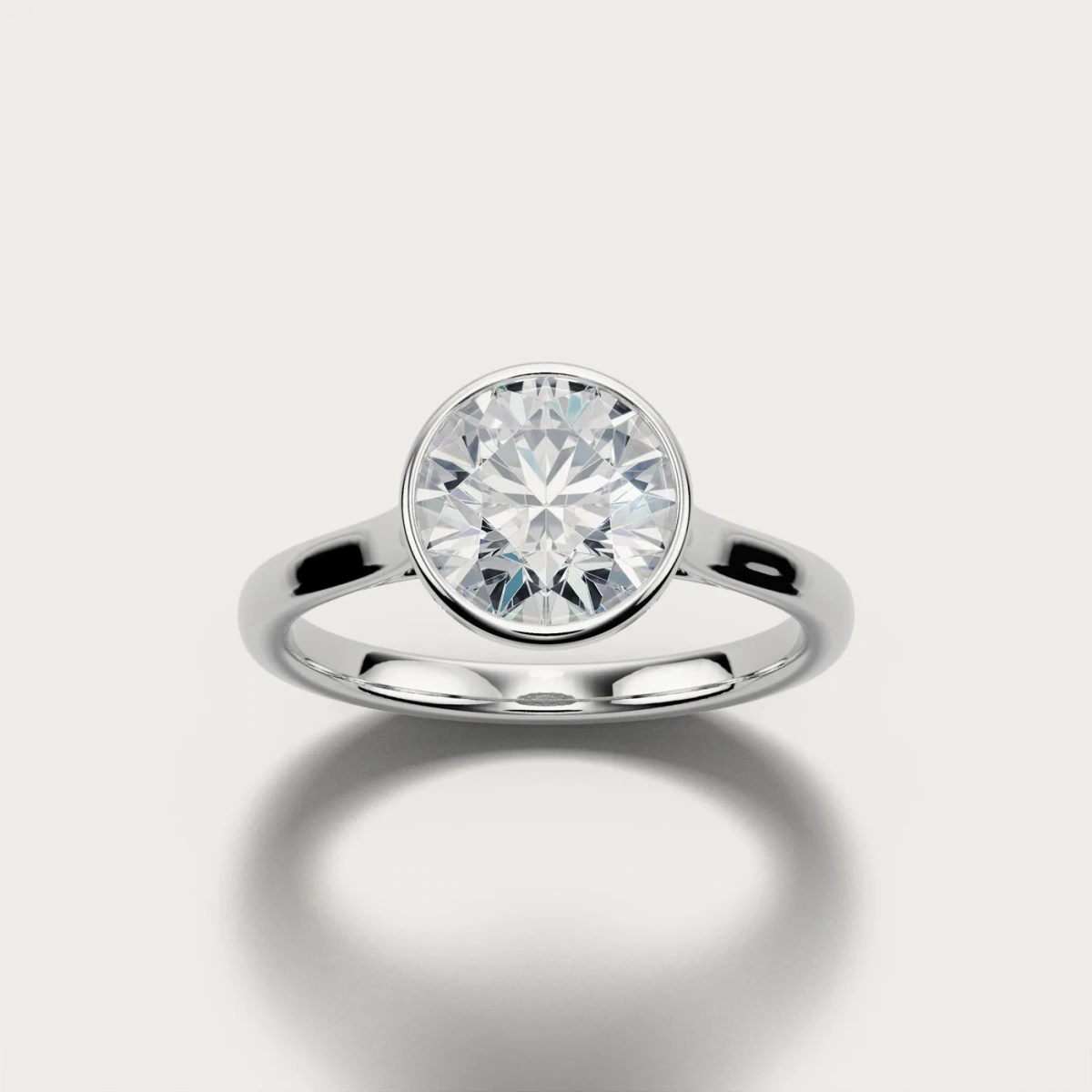
Bezel Solitaire — a rim instead of claws
A bezel is a good test of who answers for what: the model has to leave exactly enough metal to close over the stone, and the setter has to close it without marking the stone. One party answering for both is the simplest way to get it right.
What should you ask, whichever you choose?
- Who checks that the model can be cast, and when?
- Who pays when a casting fails?
- Is the price written down before I commit, and does it move afterwards?
- Who sets the stones, and who counts them in and out?
- What does the inspection check, and do I get photos?
- Who owns the model files once I have paid?
Questions about who does what
- What is the difference between a casting house and a CAD designer?
- A CAD designer makes the 3D model of a piece; a casting house makes the piece in metal from a finished model. Each answers for its own part of the job.
- What does a jewelry design studio do?
- It takes the piece from idea to finished jewelry: the CAD model, the castability check, the price, the casting and setting, and the inspection, with one contact for the whole job.
- Do I need a CAD file before I contact a casting house?
- Usually, yes: a casting house works from a castable model. If you only have a sketch or a photo, you need a modeler or a studio first.
- Who is responsible if a casting fails?
- It depends on the arrangement, so settle it before the first job. At AurumFlow, a piece that falls short of the approved model is remade at our cost.
- Can I send AurumFlow a model I already have?
- Yes. A design file is one of the things you can send to start a project, along with a photo or a sketch.
Written by AurumFlow
The jeweler’s design studio: CAD, casting and setting, one price.