What “castable” means, and why a beautiful model may not be
Thin walls, trapped voids, prong seats and where the metal enters. The checks between a model that renders well and one a workshop can actually make.
Updated August 7, 2026 · 4 min read
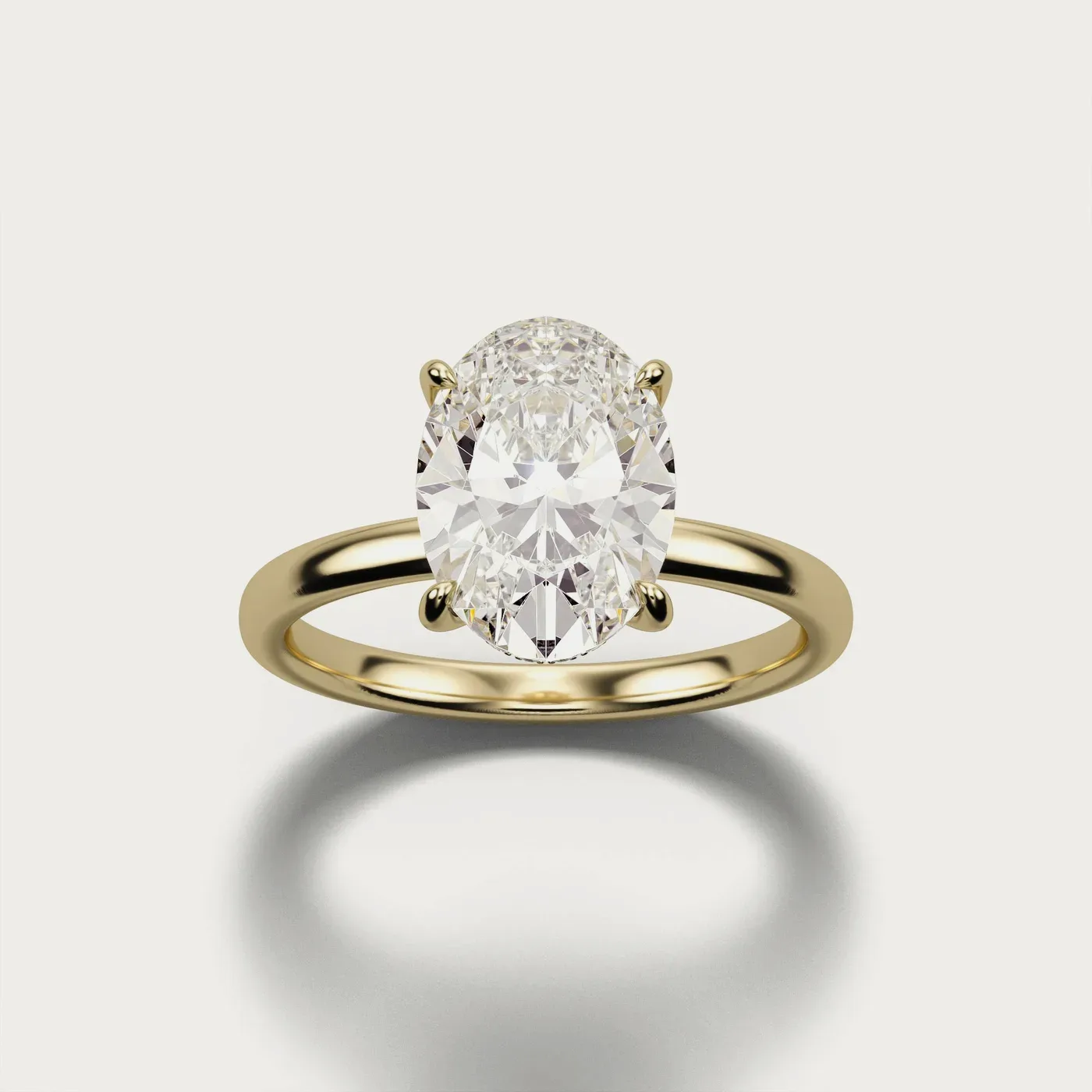
A model can be flawless on screen and impossible at the bench. Rendering only asks that a surface exists; casting asks that molten metal can reach every part of it, that wax can get out again, and that what comes back survives being set and worn. Most of what separates the two is invisible in a picture, which is why "it looked fine" is the most expensive sentence in this trade.
These are the things that actually go wrong, roughly in the order they cost you money.
Walls that will not fill
Metal entering a mould is already losing heat. Below a certain thickness it freezes before the cavity is full, and what comes out has a hole in it or a section missing entirely. The threshold is not one number — it moves with the metal, the size of the piece and how far that wall is from where the metal enters — which is exactly why "make it as thin as possible" is not a specification anybody can work to.
The related failure is the opposite one. Metal shrinks as it solidifies, and a thick section next to a thin one pulls metal out of the join as it cools, leaving porosity inside the piece that nobody sees until it is polished through. Even wall thickness is not an aesthetic preference; it is how a piece comes out solid.
Voids with no way out
A sealed hollow inside a model is a trap. In lost-wax casting the pattern has to burn out and the investment has to drain; a void with no opening keeps both, and what is left either ruins the casting or turns to steam in a hot flask. Hollowing a heavy piece to save gold is good practice — hollowing it without giving the inside a way to empty is not.
Somewhere for the metal to enter
Every casting needs a sprue: a channel where metal goes in and air comes out. Where it attaches is a real decision — it wants to feed the heaviest section, it wants to be somewhere the scar can be finished away, and it must not be across a surface that has to stay crisp. A model designed with no thought for it either casts badly or arrives with a mark in the wrong place.
Prong seats, and holes that are actually holes
A prong on a render can be a tapered cylinder pointing at a stone. A prong that will be set has a seat cut into it, sized to the girdle of the stone that is going in — not to a stone in general. Get the seat wrong and the setter cuts it at the bench, which is fine once and expensive across a run of thirty.
Pavé is the same argument at smaller scale. Every stone needs a hole through to let light in, beads with enough metal behind them to be raised without breaking out, and enough left between neighbors that the row does not become a perforation. A pavé band that looks immaculate at render distance can be a strip of foil where the seats meet.
What we check, and what we cannot
A model we draw is checked against all of this before it reaches you, and it is checked by the people who will answer for it if the casting fails. That is the whole difference between a CAD service and a production partner: the model is not the deliverable, a piece that can be made is.
A file you upload yourself is a different matter, and we are explicit about it rather than quietly hopeful. We can weigh it, price the metal and cast it — but nobody here has examined whether its walls will fill or its voids can drain, and we will not pretend otherwise. If it has been cast successfully before, say so; that is the most useful thing you can tell us about it.
The allowance nobody mentions
Some metal is always lost — to the sprue, to the button at the top of the flask, to oxidation and to the refining that follows. A quote that does not account for it is a quote that will be revised later. Ours carries a casting-loss allowance as its own line rather than buried in the metal price, so you can see what is being charged for and argue with it if you think it is wrong.
None of this is a reason to design conservatively. It is a reason to have the argument at the CAD stage, where changing your mind costs a revision, rather than at the flask, where it costs a casting.
Every file described here is delivered with the model, and yours to keep.