How long does custom jewelry take? A step-by-step timeline
From a sketch or a photo to a finished, inspected ring: what happens at each step, how long each one takes, and what actually slows an order down.
AurumFlow
October 27, 2026 · 5 min read
Most of the time in a custom order is not spent making anything. It is spent waiting: for a ring size, for a stone decision, for a second round of changes, for somebody to approve a price. The steps that involve a bench are short and predictable; the gaps between them are where a short job becomes a long one.
This is the timeline as AurumFlow, a New York jewelry design studio for jewelers, runs it, step by step — with the parts you control marked as such, because those are the ones worth planning around.
What happens at each step, and how long does it take?
- Step
- Send the brief: a photo, a sketch or a file, with ring size and metal
- Typical time
- Same day
- Who
- You
- Step
- Approve the design price; pay the $80 deposit
- Typical time
- Same day
- Who
- You
- Step
- CAD model, checked for casting, with the piece’s price in writing
- Typical time
- 1–2 business days
- Who
- Your designer
- Step
- Review the model; one round of changes is included
- Typical time
- Your review time
- Who
- You
- Step
- Approve the piece’s price and pay
- Typical time
- Same day
- Who
- You
- Step
- Casting, setting, polishing
- Typical time
- 5 business days
- Who
- The bench
- Step
- Inspection at QC, then tracked, insured shipping with a signature on delivery
- Typical time
- Carrier’s time
- Who
- QC, then the carrier
| Step | Typical time | Who |
|---|---|---|
| Send the brief: a photo, a sketch or a file, with ring size and metal | Same day | You |
| Approve the design price; pay the $80 deposit | Same day | You |
| CAD model, checked for casting, with the piece’s price in writing | 1–2 business days | Your designer |
| Review the model; one round of changes is included | Your review time | You |
| Approve the piece’s price and pay | Same day | You |
| Casting, setting, polishing | 5 business days | The bench |
| Inspection at QC, then tracked, insured shipping with a signature on delivery | Carrier’s time | QC, then the carrier |
Two of those rows are yours, and they are the two that vary the most. A model reviewed the afternoon it arrives and approved the next morning loses almost no time. A model that sits for a week while a client thinks it over adds a week, and nothing anyone does at the bench can win it back.
When does the production clock start?
When you approve the piece’s price and pay for it. Not when the brief arrives, and not when the model is sent: production is 5 business days from that approval, and that is the date to quote a client from. Counting from the first conversation is how a promise slips without anybody having been slow.
The design has its own, earlier start. Modeling begins once you approve the design price and pay the $80 deposit; the rest of the design’s price is part of the piece’s price, so you pay it once, when you approve the piece.
Until you approve it, a price follows the gold, and an expired quote is priced again at that day’s gold before you pay. Once you approve, it is fixed — the gold does not move your invoice afterwards.
What slows a custom order down?
Almost never the bench. In practice, the delays come from a handful of things that are visible on the first day:
- No ring size, or a size in another system (UK and Australia use letters, Europe uses the inside circumference). Send a US size or the inside circumference in millimeters.
- The center stone is not decided. The seat is cut to the stone, so a model drawn for “about a carat” has to be redrawn when the stone turns out to be an elongated oval.
- More than one round of changes. One round comes with every design; each round after that is $60, and each one costs a day or two on the calendar as well.
- A price approved late. An expired quote is not a problem, but it is one more step before production can start.
- A brief that describes the piece instead of showing it. A photo of something close, with notes on what to change, is faster than three paragraphs.
Can it be done faster?
Yes, in two ways. The first is rush, for a piece you need sooner: +25% of the labor. Ask for it when you order, not after; a rush decided on the day the piece was due is a rush nobody can deliver.
The second is to skip the CAD step entirely. A design from our own catalog is already modeled and rendered in every stone shape and metal it is offered in, so there is no design to wait for and no design fee — you choose the build, approve the price, and the bench starts.
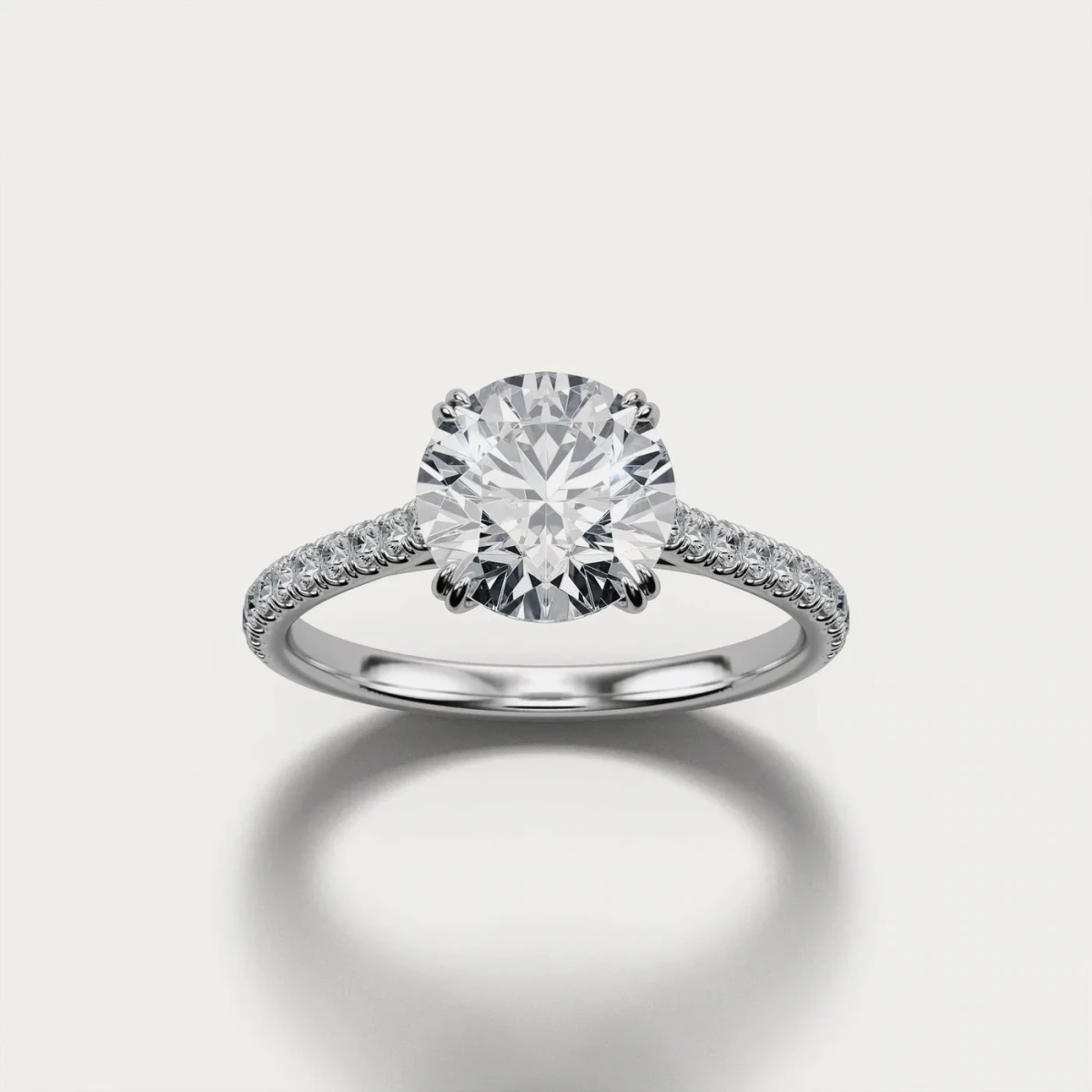
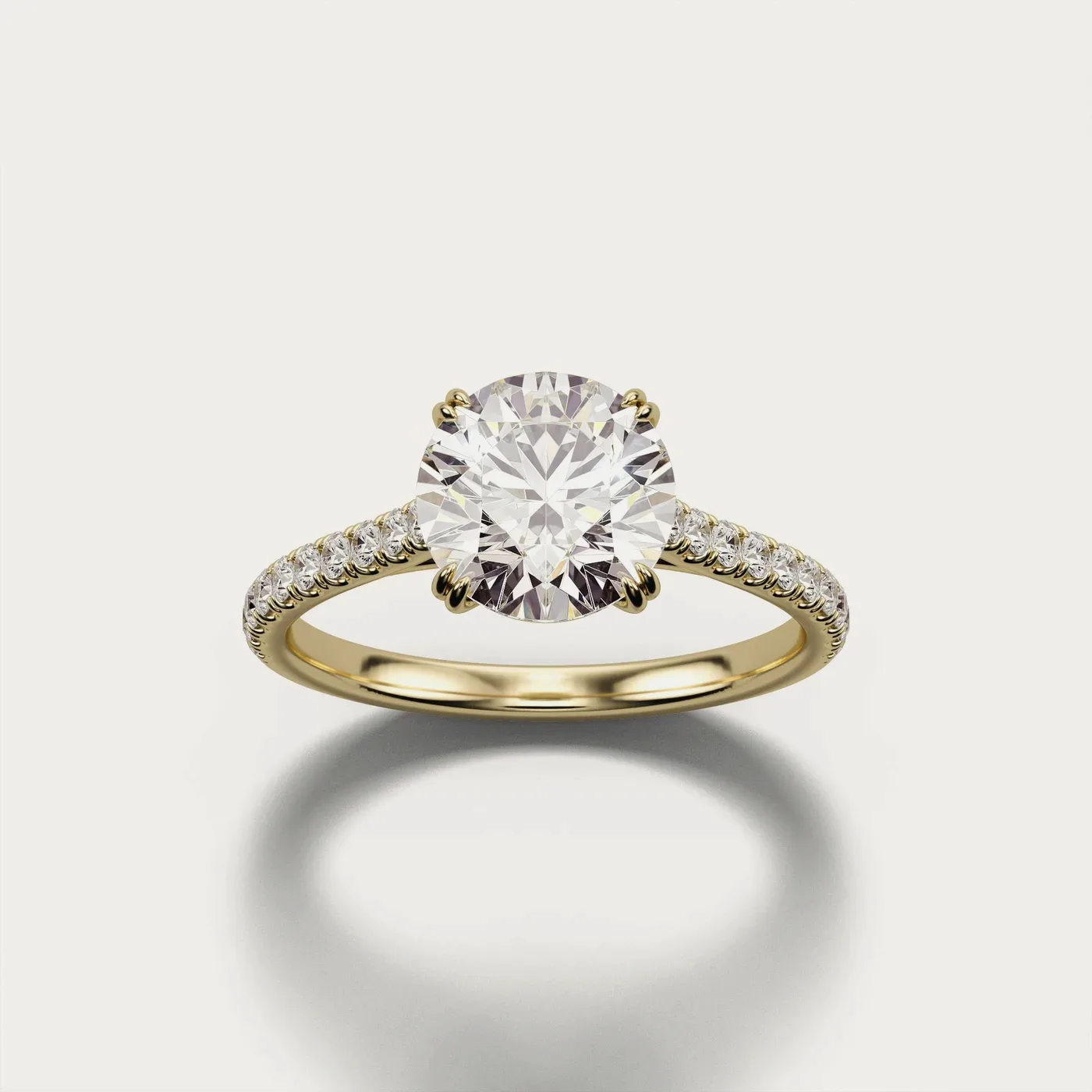
Pavé Solitaire — a solitaire with the shoulders set
A catalog design like this one is already drawn in every shape it is offered in, so ordering it starts at the bench rather than at the modeler.
How do you give a client a date you can keep?
- Collect the ring size and the stone before the brief goes out, not after the model comes back.
- Promise the model, not the ring, at the first meeting: “you will see it in 1–2 business days.”
- Book the review with the client when you send the brief, so the model does not wait for them.
- Quote the delivery date only once the piece’s price is approved: 5 business days, plus inspection, plus the carrier’s time.
- If the date is fixed — a proposal, a wedding — say so on the brief, and decide on rush then.
None of that is complicated. It is the difference between a timeline that is counted from the steps you control and one that is counted from a calendar date somebody said out loud.
Timeline questions
- How long does a custom engagement ring take from sketch to delivery?
- 1–2 business days for the CAD, then your review, then 5 business days to make it once you approve its price, followed by inspection at QC and the carrier’s time. Most of the variation is in the review.
- Can I see the model before I pay for the piece?
- Yes. You pay a deposit of $80 when you approve the design price, and the model comes back for your review with the piece’s price in writing. You pay for the piece only when you approve that price.
- When does the five-day production clock start?
- When you approve the piece’s price and pay for it — not when the brief arrives or the model is sent.
- What adds days to a custom order?
- A missing ring size, a center stone that is not decided, extra rounds of changes, and a quote that expires before it is approved. None of them happen at the bench.
- Is a catalog design faster than a custom one?
- Yes. A catalog design is already modeled in every shape and metal it is offered in, so there is no CAD step and no design fee; production starts once you approve the price.
Written by AurumFlow
The jeweler’s design studio: CAD, casting and setting, one price.