How much jewelry CAD costs — the actual price list
A fixed price by piece and complexity, with lead times, read live from the rate card we quote from. Plus what is included and what is charged separately.
Updated August 7, 2026 · 3 min read
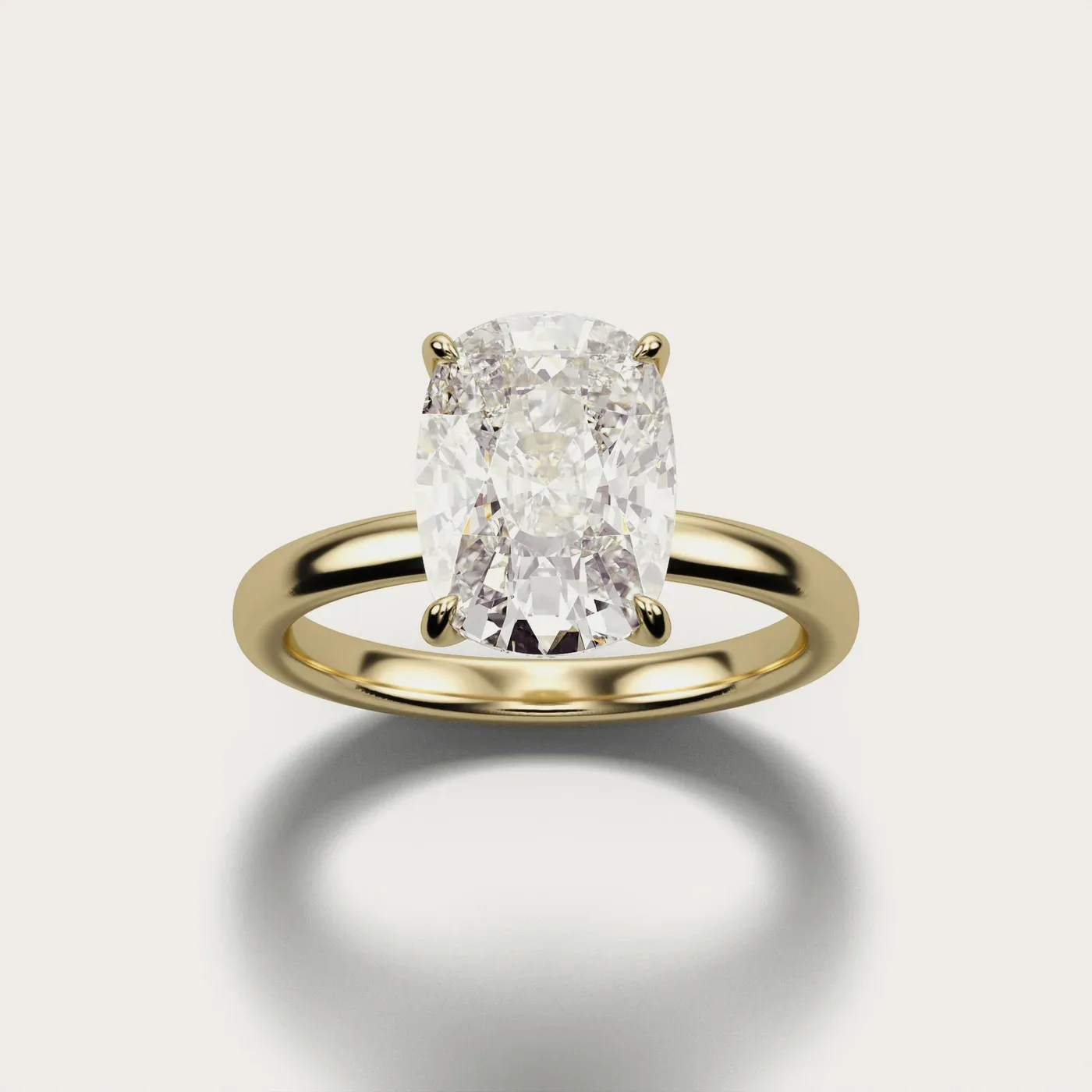
Most studios will not tell you what CAD costs until you ask, and the reason usually given — that every piece is different — is true and beside the point. Pieces differ, but not infinitely: a plain band, a halo and a micro-pavé openwork gallery are three recognisable amounts of work, and any studio that has done a few hundred of them knows which is which before quoting. So here is the list.
These are the same numbers a client sees inside the platform before they submit an order, read from the same rate card. If a rule changes, this table changes with it.
- Simple
- A plain band, a bezel solitaire, a smooth pendant — clean geometry, few stones.
- Standard
- A halo, a three-stone, a shaped band with pavé — the everyday of a jewelry line.
- Complex
- Micro-pavé, hidden halos, openwork galleries, hand-shaped organics — where the hours go.
Why fixed and not hourly
An hourly rate moves the risk of a difficult piece onto the person who did not choose how to model it. It also makes the one thing a client wants — a number, now — impossible to give, and quietly rewards slowness. A fixed price by band means the studio carries the risk of misjudging the work, which is the right way round: we are the ones who can judge it.
The consequence is that the band matters, and it is decided before anything starts rather than argued about afterwards. If we put a piece in the wrong band, that is ours to absorb.
What the price includes
- A model drawn to real casting tolerances — not a shape that renders well.
- A castability check before it reaches you: wall thicknesses, prong seats, whether the thing can leave a mould.
- The files, in every format, yours to take anywhere.
- Two rounds of revisions, for changing your mind. Fixing our mistakes is not a revision.
Revisions past the two included are charged, and the rate is on the card. It is the only line here that surprises people, so it is worth saying plainly rather than in a footnote.
What it does not include
Two other things get priced, and they are genuinely different jobs rather than upsells.
- Production — casting, setting and finishing. Priced from what the piece weighs and what metal costs that morning, so it is arithmetic rather than a quote. Stones are chosen with you and priced separately.
- Rendering — priced by the set, by a person. There is no table for it because the sets people ask for vary too much for one to be honest: a piece in three metals and a fifteen-piece campaign are not the same job.
Batches
Up to six pieces in one order price themselves from the table. Beyond that a person quotes it, and not for the reason you might expect: a batch usually earns a discount the rate card does not know how to give. Sending twenty pieces through as twenty single orders is the expensive way to do it.
What moves a piece up a band
Almost always the same three things: how many stones there are and how they are held, whether the gallery under the stone is open or solid, and how much of the surface is shaped by hand rather than by a construction. A three-stone with a plain shank is standard work; the same three stones over an openwork basket with a hidden halo is not.
If you are unsure which column your piece is in, send the reference before the order. Being told the band costs nothing and takes an hour, and it is a much better conversation than the one that starts after an invoice.
Every file described here is delivered with the model, and yours to keep.